


 English
 русский
 Español
 عربى
عربى 简体中文
简体中文
Contact Us
All of your quotes will be answered within 2 hours by our professional sales support.
Industry News
 2026.02.27
 Industry News
Contents
A CNC lathe turret is a tool-carrying device that automatically indexes tools according to a program, used for quickly switching between different tools during machining. Each tool position can mount different types of tools, such as external turning tools, internal drilling tools, parting tools, drills, or milling cutters.
A typical CNC lathe turret mainly consists of the following parts:
In some high-end models, the turret also integrates a power output structure to drive the rotating tool.
The working process of a CNC lathe turret can be divided into the following steps:
The indexing and locking methods of CNC lathe turrets directly affect tool change speed, positioning accuracy, and long-term operational stability. Hydraulic turrets and servo turrets are currently the two more widely used types.
Hydraulic turrets use a hydraulic system to release, index, and lock the turret. Their mature structure makes them suitable for continuous and stable machining. Servo turrets, on the other hand, are directly driven by a servo motor, emphasizing control precision and response speed, making them more suitable for complex processes and high-precision machining requirements.
| Comparison Dimensions | Hydraulic Turret | Servo Turret |
| Drive Method | Hydraulic System Driven | Servo Motor Direct Drive |
| Tool Change Speed | Stable, moderate speed | Fast, responsive |
| Positioning Accuracy | Meets conventional machining needs | High positioning accuracy |
| Structural Complexity | More hydraulic lines | Relatively compact structure |
| Maintenance Requirements | Requires monitoring of hydraulic system status | Relatively simplified maintenance |
| Applicable Scenarios | Batch machining, stable cycle production | High-precision, multi-process machining |
Based on function, CNC lathe turrets can be divided into conventional (static) turrets and powered turrets. The essential difference lies in whether the tool has rotary cutting capability.
Conventional turrets primarily serve traditional turning processes, while powered turrets, through a built-in power transmission structure, enable tool rotation, thereby achieving composite machining such as milling, drilling, and tapping.
| Comparison Dimensions | Conventional Turret | Powered Turret |
| Tool Rotation | No Rotation | Rotation |
| Completable Machining Processes | Primarily Turning | Turning + Milling + Drilling |
| Machining Flexibility | Lower | Higher |
| Support for Y-axis Machining | Usually Not Supported | Often Used with Y-axis |
| Equipment Complexity | Lower | Higher |
| Applicable Parts | Simple Shafts, Rotating Bodies | Complex Multi-faceted, Multi-hole Parts |
The number of turret stations determines the number of tools that can be installed simultaneously, significantly impacting multi-process machining. 8-station and 12-station turrets are common configurations, each with its own applicable scenarios.
The 8-station turret has a compact structure and short tool change path; the 12-station turret is suitable for machining parts with many tool types and complex processes.
| Comparison Dimensions | 8-station turret | 12-station turret |
| Number of tools that can be installed | Fewer | More |
| Tool change time | Shorter | Slightly longer |
| Suitable process complexity | Low to medium | Medium to high |
| Equipment structure | Compact | Relatively complex |
| Tool change frequency | Higher | Lower |
| Typical applications | Simple or standardized parts | Multi-process, complex parts |
The choice of turret type is essentially a balance between machining complexity, efficiency requirements, and equipment configuration:
In scenarios mainly based on standard turning processes such as external turning, end facing, internal turning, and parting, the part structure is relatively simple, the processes are concentrated, and the demand for lateral or milling machining is relatively low.
Recommended Turret Types:
These turrets have mature structures, stable operation, and can meet continuous machining needs. For mass-produced shaft or disc parts, they can control equipment investment costs while ensuring stability.
When parts contain multiple structures such as outer diameters, end faces, hole systems, and slots, and frequent tool changes are required during machining, the number of turret positions and tool change efficiency are particularly critical.
Recommended Turret Types:
More tool positions reduce tool change frequency. Servo turrets are more flexible in terms of indexing speed and positioning accuracy, suitable for multi-process continuous machining, and help improve overall production cycle time.
When machining parts with side holes, planes, keyways, or eccentric structures, traditional turning alone is insufficient to complete all processes.
Recommended Turret Types:
A power turret can drive the tool to rotate, and in conjunction with X/Z axes or even Y-axis linkage, milling, drilling, and tapping operations can be completed on the same machine, reducing workpiece transfer between different machines.
In precision parts machining, tool positioning accuracy and tool change repeatability directly affect the consistency of the finished product.
Recommended Turret Types:
Servo-driven turrets offer more controllable indexing processes and stable positioning accuracy, suitable for machining tasks with high dimensional tolerances and geometrical accuracy requirements.
In batch production or machining environments with specific cycle time requirements, reducing non-cutting time is key to improving efficiency.
Recommended Turret Types:
Quick indexing and reasonable tool arrangement help shorten auxiliary time. For mass production, stability and cycle time control are often more important than feature stacking.
In practical applications, the selection of a CNC turret should comprehensively consider the following factors:
Equipment maintenance and long-term operating costs. Different machining scenarios have different requirements for CNC turrets. A reasonable turret selection is not about the quantity of turrets, but about whether they match the actual machining needs.
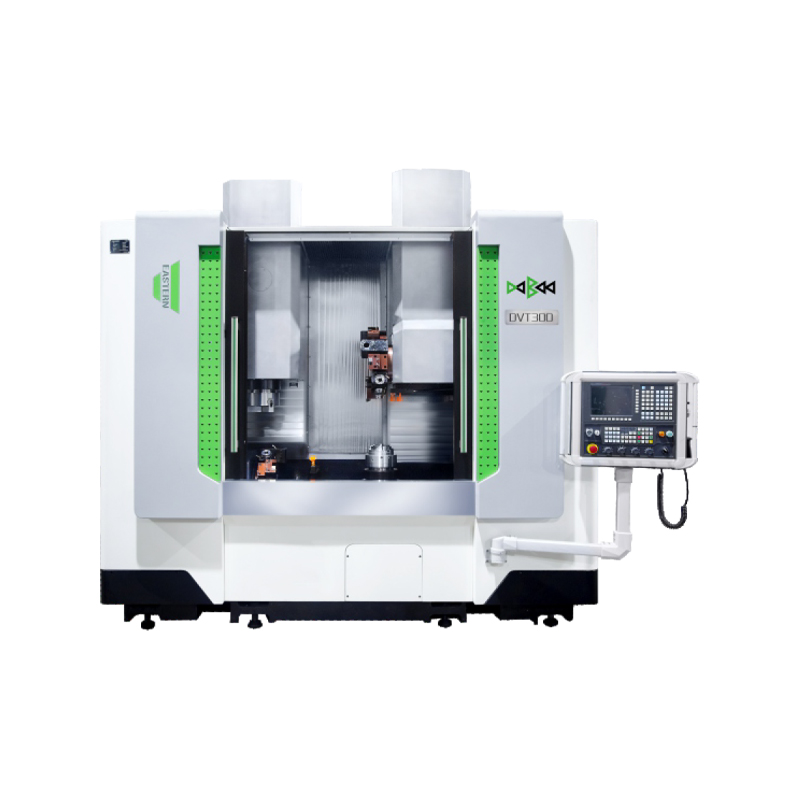
Eastern CNC Machine Tools adopts a mature and stable structural design and flexible system integration solutions, supporting multi-level manufacturing tasks from traditional turning to integrated mill-turn machining. Whether it's a high-stability hydraulic turret, a fast-responding servo turret, or a high-position turret configuration suitable for multi-process continuous machining, Eastern CNC can provide cost-effective solutions, coupled with comprehensive customized technical support, to help manufacturing enterprises significantly improve productivity while ensuring quality and efficiency.
Choosing the right turret type for your machining task, and considering the product advantages of Eastern CNC machine tools, can be based on the following key dimensions:
Stable and Reliable Turret Drive and Positioning
Whether hydraulically or servo-driven, Eastern CNC machine tools employ mature and reliable turret matching solutions, ensuring both stability and high-precision positioning for long-term continuous production.
Enhanced Multi-Process Machining Capabilities
With more stationary turrets or power turrets, Eastern CNC's composite machine tools can complete turning, milling, drilling, and other composite machining operations on a single machine, effectively reducing process transfers and increasing the one-time setup completion rate.
Flexible Adaptability to Different Part Requirements
For parts with complex structures, multiple tool types, and frequent tool changes, adding high-station turrets or servo turrets can improve tool change efficiency and machining consistency, making them particularly suitable for batch and medium-batch production scenarios.
Automation and High-Efficiency Production
Eastern CNC's machine tool products support automated configuration, rapid tool changes, and automatic loading and unloading solutions, significantly improving cycle time and production continuity. Localized support and service guarantee: The brand provides professional technical consultation, rapid pre-sales/after-sales service and customized support to help users optimize turret and machine tool configuration according to actual processing needs.
RECOMMENDED PRODUCTS
All of your quotes will be answered within 2 hours by our professional sales support.
Use reliable parts and components to ensure product quality.
You can expect your order fulfilled within 60 days after placing the order.
All our products come with a one-year warranty.



sales@east-cnc.com

Shangma Industry Area, Shitang Town, Wenling City, Taizhou, Zhejiang, China.

Copyright © Taizhou Eastern CNC Technology Co., Ltd.

Machine Tool Manufacturer Privacy Policy