


 English
 русский
 Español
 عربى
عربى 简体中文
简体中文
Contact Us
All of your quotes will be answered within 2 hours by our professional sales support.
Industry News
 2025.09.19
 Industry News
Contents
A linear guideway lathe relies on a motion system that typically includes a rail, a sliding block, and a recirculating ball or roller mechanism. This arrangement reduces friction between moving parts and helps maintain stable positioning during machining. The guide block moves smoothly along the rail while the rolling elements circulate back into position, enabling consistent linear motion. The design is designed to balance rigidity, precision, and smooth operation in turning applications.
Traditional lathes often use box ways, also called hard ways. These involve a broad contact surface between the saddle and the machine bed, which provides strong support and vibration absorption. Box way designs are suited for heavy-duty cutting and larger workpieces, though they generally allow lower feed rates and slower accelerations.
By contrast, linear guideway lathes employ rolling contact between the guide block and rail. This reduces friction and heat generation, permitting faster travel speeds and improved responsiveness. Linear designs are lighter in movement and allow more rapid positioning, which is advantageous for operations requiring higher spindle speeds or frequent tool changes. However, the reduced contact area compared with box ways may affect load-bearing capability in very heavy cutting conditions.
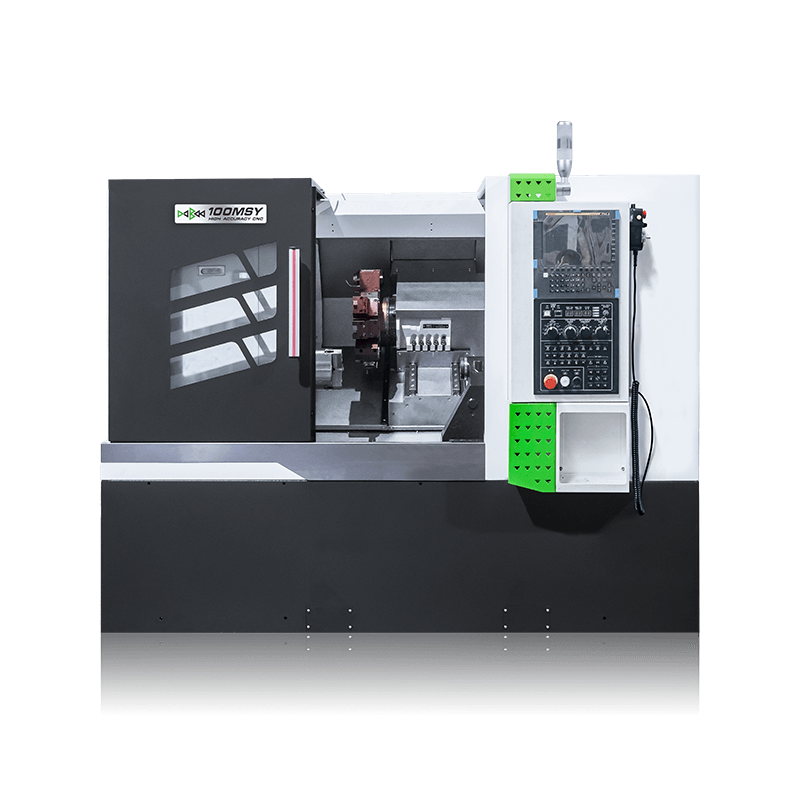
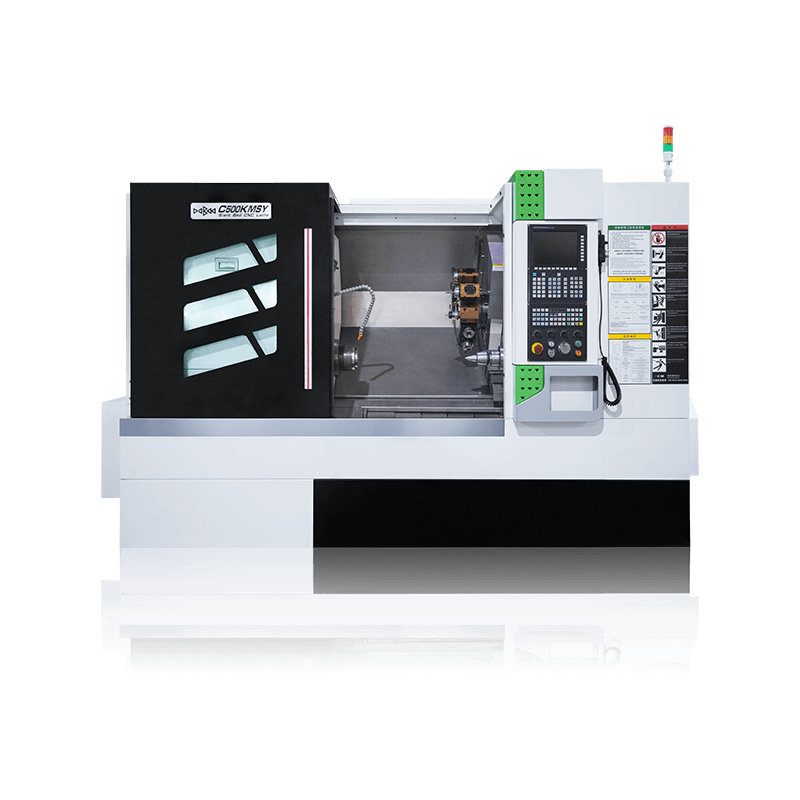
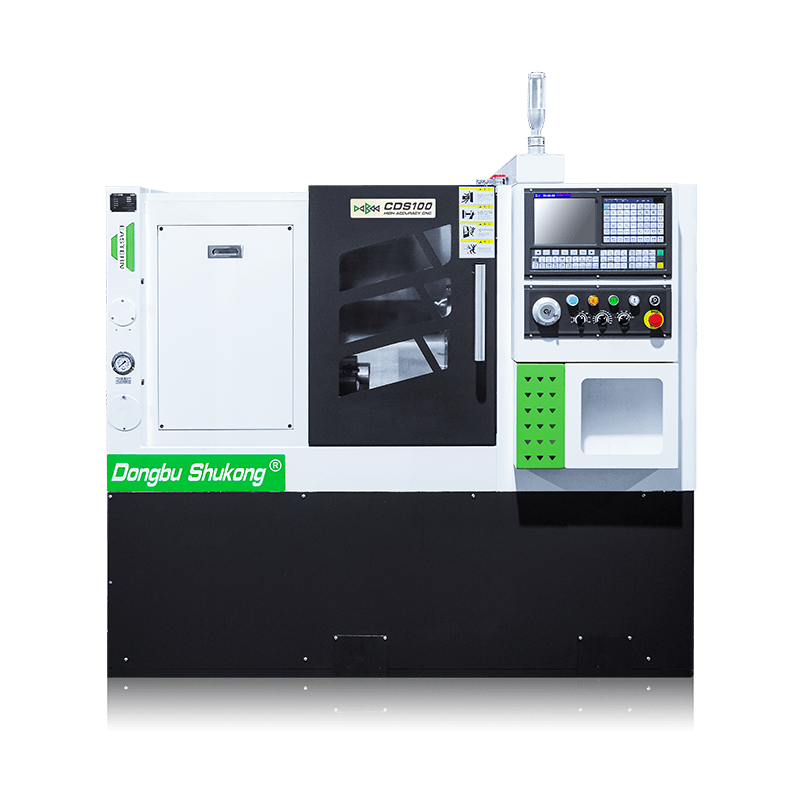
Slant-bed lathes typically utilize linear guide systems, consisting of a slide and a ball or roller recirculating system, offering low friction and smooth motion. East-CNC's slant-bed products include bed structures with varying inclination angles (such as 30°, 35°, and 45°), which enhance machining rigidity while facilitating natural chip evacuation and minimizing interference. The use of linear guides enhances feed rate, positioning accuracy, and responsiveness, making them suitable for machining applications requiring high precision and efficiency, such as aviation and automotive parts. Some models also offer subspindles, Y-axes, or multi-station turrets, enhancing machining flexibility and automation. The combination of a slant bed and linear guides is ideal for high-precision machining of small and medium-sized workpieces, as well as production environments demanding efficiency and surface quality.
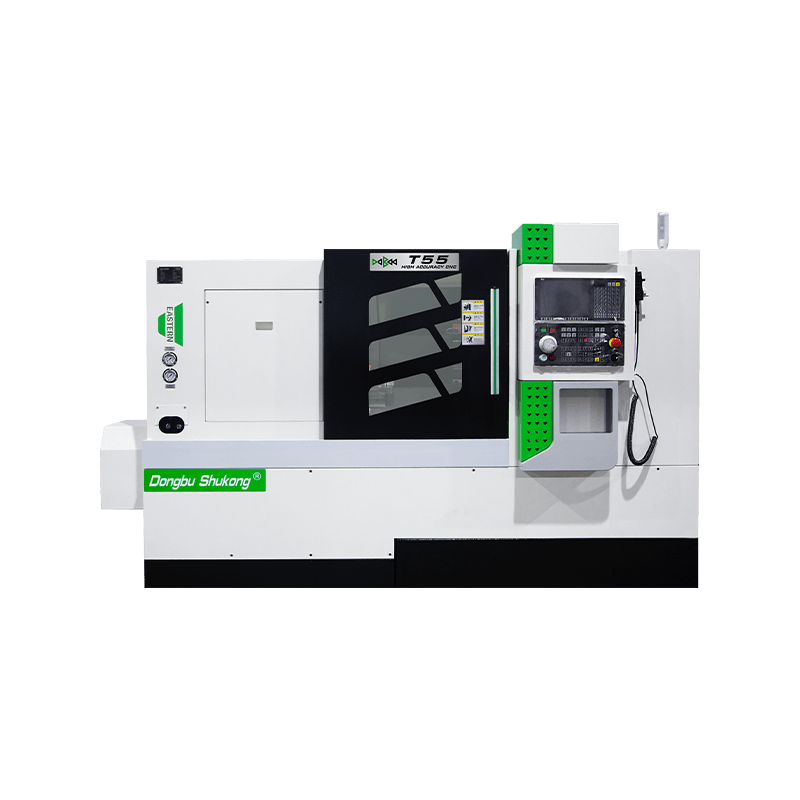
Flat-bed lathes typically utilize hard rails, also known as box-type guides. Hard rails offer a large contact area, good load-bearing capacity, and vibration resistance, making them ideal for machining large parts or heavy cutting applications. While they lack the feed rate and responsiveness of linear guides, they maintain stability and rigidity under high loads, deep cuts, and rough machining. Flat-bed hard rail models require regular lubrication and cleaning, but their proven structure and long life make them suitable for turning tasks requiring high rigidity and durability. Therefore, flat-bed hard rails are more suitable for large parts or heavy-duty applications, while inclined-bed linear guides are more suited to precision parts and mass production. The two complement each other in their applications.
Several factors define the performance of linear guideways in lathes:
Positioning Accuracy: The recirculating ball or roller system ensures consistent movement, supporting precise tool paths.
Dynamic Response: Lower friction enables faster acceleration and deceleration of the saddle, improving cycle times.
Rigidity: Though lighter than box ways, modern linear rails are engineered to deliver adequate stiffness for many small to medium cutting applications.
Maintenance Needs: Rolling elements reduce wear and often require less lubrication compared to sliding surfaces.
Surface Finish: The stable and smooth feed movement contributes to quality finishing in turning processes.
The machine tool industry is seeing steady demand for equipment that supports high spindle speeds, improved accuracy, and more compact machine layouts. Linear guideway lathes align with these trends by offering faster axis motion and space-efficient configurations. As industries emphasize precision machining of smaller parts, linear systems have become widely adopted.
Meanwhile, box way lathes continue to serve sectors that require heavier cuts and larger workpieces. Both designs remain relevant, and many manufacturers choose based on the balance of speed, accuracy, and load capacity required in production.
The development of linear guideway lathes has expanded the options available in turning technology. With their rail, block, and recirculating element design, these machines provide efficient movement and responsive performance. The distinction between box way and linear guideway systems, along with bed type selection, allows users to align machine choice with specific machining goals.
The development of linear guideway lathes has expanded the options available in turning technology. With their rail, block, and recirculating element design, these machines provide efficient movement and responsive performance. The distinction between box way and linear guideway systems, along with bed type selection, allows users to align machine choice with specific machining goals. We offers both linear guideway slant-bed lathes and box way flat-bed lathes, giving manufacturers flexibility to select the right machine for precision machining, heavy-duty turning, or high-volume production.
RECOMMENDED PRODUCTS
All of your quotes will be answered within 2 hours by our professional sales support.
Use reliable parts and components to ensure product quality.
You can expect your order fulfilled within 60 days after placing the order.
All our products come with a one-year warranty.



sales@east-cnc.com

Shangma Industry Area, Shitang Town, Wenling City, Taizhou, Zhejiang, China.

Copyright © Taizhou Eastern CNC Technology Co., Ltd.

Machine Tool Manufacturer Privacy Policy