


 English
 русский
 Español
 عربى
عربى 简体中文
简体中文

Contact Us
All of your quotes will be answered within 2 hours by our professional sales support.
Industry News
 2026.01.23
 Industry News
What is a heavy-duty CNC lathe?
A heavy-duty CNC lathe, also known as a heavy-duty cutting CNC lathe, is a metal cutting machine tool designed specifically for large-sized, heavy-weight workpieces with high cutting loads. Compared to ordinary CNC lathes, heavy-duty CNC lathes have been significantly reinforced in terms of bed structure, spindle system, guide rail type, drive torque, and overall machine rigidity.
Heavy-duty CNC lathes are typically used for machining:
Typical applications include: large valve bodies, industrial flanges, wind turbine spindles, oil and gas pipeline components, and key components of construction machinery.
Essentially, a Heavy Duty Lathe Machine is not just a "larger" lathe, but a complete engineered solution designed for long-term, stable heavy-duty cutting.
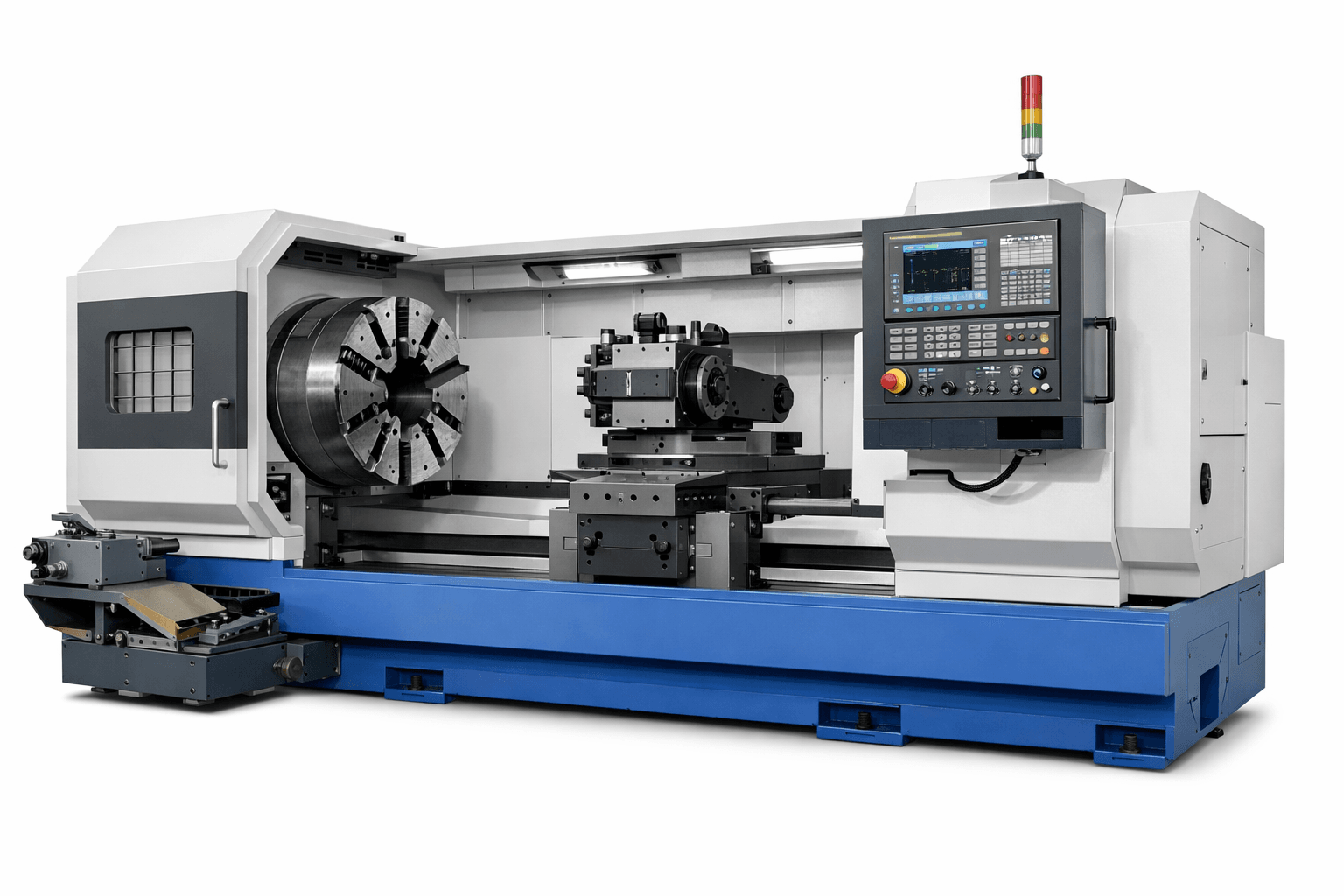
Working Principle of Heavy-Duty CNC Lathes
The basic machining principle of a heavy-duty CNC lathe is the same as that of an ordinary CNC lathe, still following the turning principle of "workpiece rotation and tool feeding," but with systematic optimization for heavy-duty cutting conditions.
1. Main Motion System
2. Feed System
3. CNC System Coordinated Control
What are the key structural features of heavy-duty cutting CNC lathes?
A true heavy-duty cutting CNC lathe must meet the demands of long-term high-load operation at the structural level. Its core features are mainly reflected in the following aspects.
1. Ultra-high rigidity bed structure
2. Large-size spindle bearing system
3. Reinforced tool post and turret
4. High-load capacity guide rail system
The type of guide rail is one of the core differentiating factors of heavy-duty lathes, and it is also an important dividing line between heavy-duty lathes and ordinary CNC lathes.
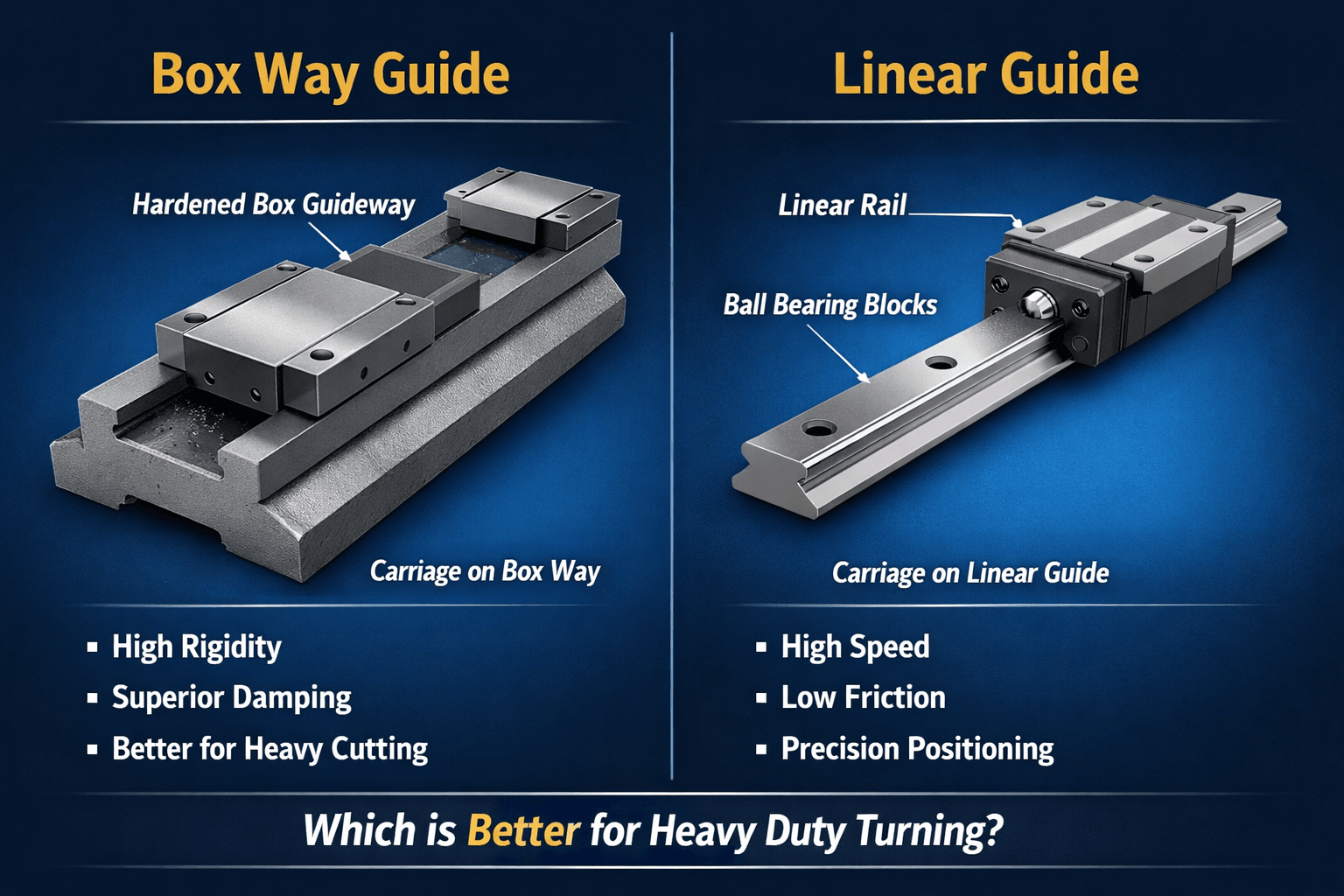
Box guide rails vs. linear guide rails: Which is more suitable for heavy-duty turning?
In the field of CNC lathes, guide rails are mainly divided into two categories: box guide rails (sliding guide rails) and linear guide rails (rolling guide rails).
1. Characteristics of linear guide rails
Advantages:
Disadvantages:
2. Characteristics of box guide rails
Advantages:
Disadvantages:
3. Why do heavy-duty turning operations prefer box guide rails?
Under heavy cutting conditions, the cutting force often exhibits:
Box guide rails, with their large-area contact structure, can effectively "absorb" cutting vibrations and impact energy, which is an advantage that linear guide rails cannot match.
Therefore, more heavy-duty CNC lathes, heavy-duty cutting CNC lathes, and Heavy Duty Lathe Machines prioritize the use of box guide rail design.
Which workpieces are suitable for heavy-duty turning?
Not all workpieces require heavy-duty lathes; parts with the following characteristics are typically more suitable for machining on heavy-duty CNC lathes:
1. Large size and weight
2. High material strength
3. Large machining allowance
4. Extremely high rigidity requirements
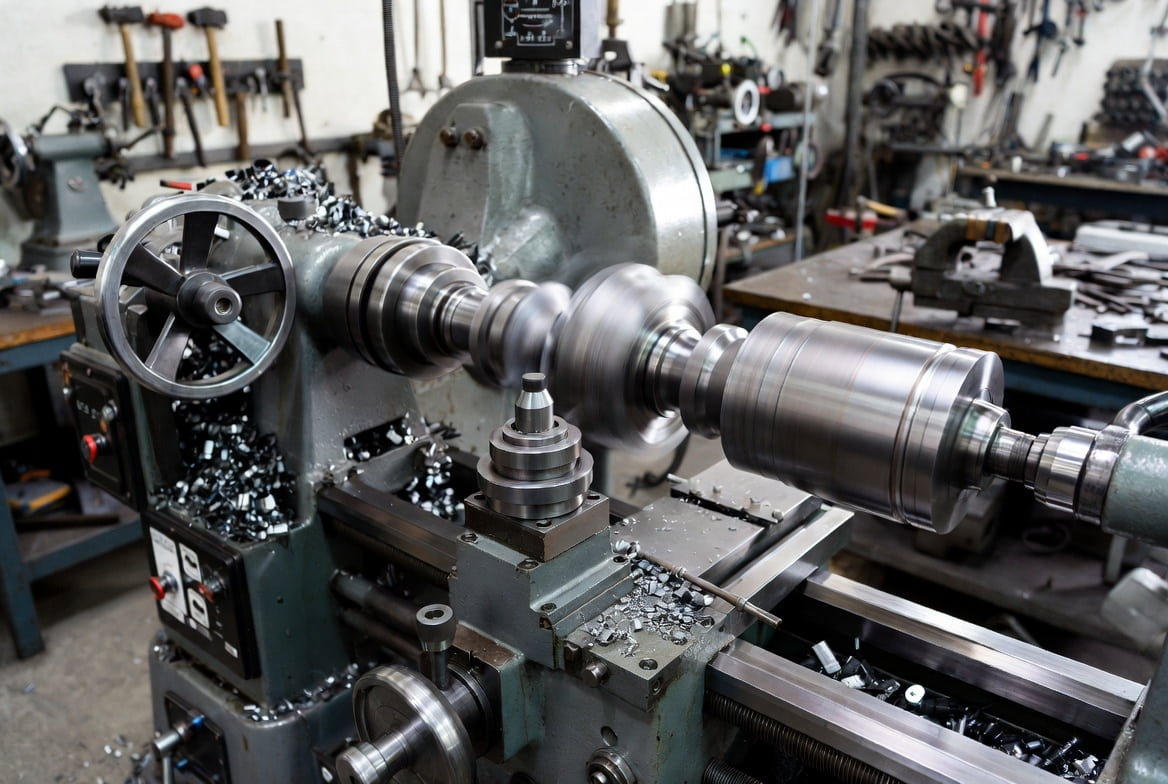
Which industries require heavy-duty turning capabilities?
Heavy-duty CNC lathes are widely used in heavy industry, mainly including:
1. Oil and gas industry
2. Energy equipment manufacturing
3. Construction machinery
4. Shipbuilding and offshore engineering equipment
It can be said that without heavy-duty CNC lathes, it would be difficult to support the core manufacturing capabilities of modern heavy industry.
What role do heavy-duty lathes play in valve body and flange machining?
1. Core equipment in valve body machining
Valve bodies typically have the following characteristics:
Heavy-duty CNC lathes can:
2. Efficiency driver in flange machining
When machining large flanges:
Heavy Duty Lathe Machines significantly improve the efficiency of rough machining of flanges through large depth of cut and high torque cutting, making them key equipment for flange manufacturing companies.
Which materials in valve manufacturing require heavy-duty turning?
In the valve manufacturing field, the following materials are almost inseparable from heavy-duty CNC lathes:
These materials generally possess:
Only heavy-duty CNC lathes with sufficiently robust structures can ensure processing quality and tool life while maintaining efficiency.
Recommended Products
Eastern CNC has focused on the research and development of heavy-duty CNC lathes for many years, creating Heavy Duty Lathe Machines such as the CK800 and CK1000. These machines feature high-rigidity beds, high-torque spindles, and high-load tool holders, meeting the heavy-duty machining needs of valve bodies, flanges, and large rotating parts. We offer various CNC system compatibility options to achieve high-precision and stable processing. With reliable performance, extensive industry experience, and comprehensive after-sales service, Eastern CNC helps enterprises improve production efficiency and reduce processing risks, making us an ideal partner for heavy industry, energy, shipbuilding, and construction machinery manufacturing.
Eastern CNC CK800 Heavy-Duty CNC Horizontal Lathe
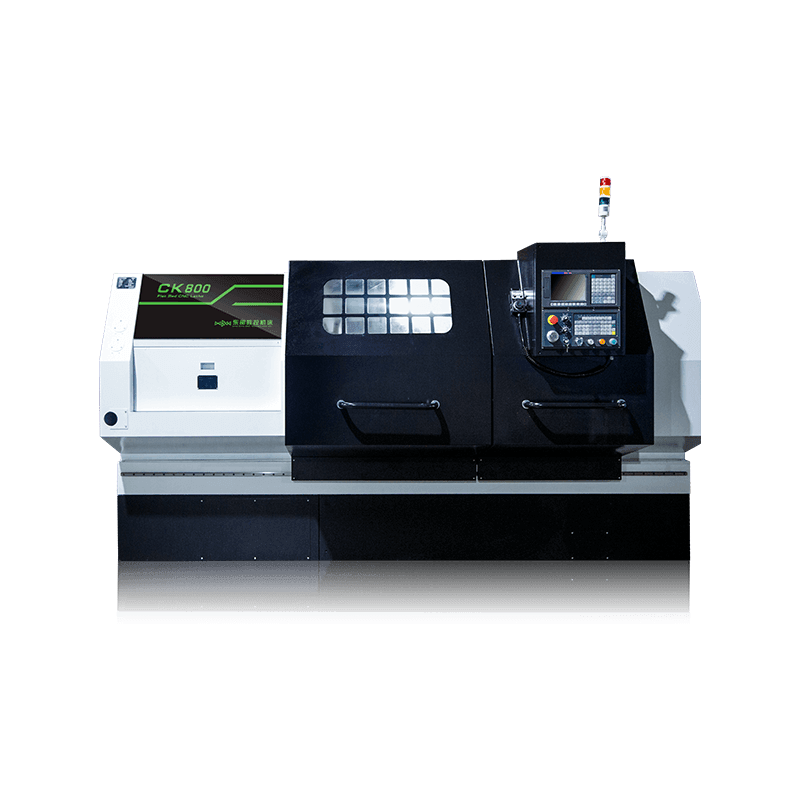
Product Positioning: Medium-sized heavy-duty CNC lathe, suitable for machining medium-sized valve bodies, flanges, and rotating parts.
Brand/Model: Eastern CNC CK800 Horizontal CNC Flat Bed Lathe Machine
Main Features and Applicability
Recommended Uses
Eastern CNC CK1000 Long-Shaft Heavy-Duty Horizontal Lathe
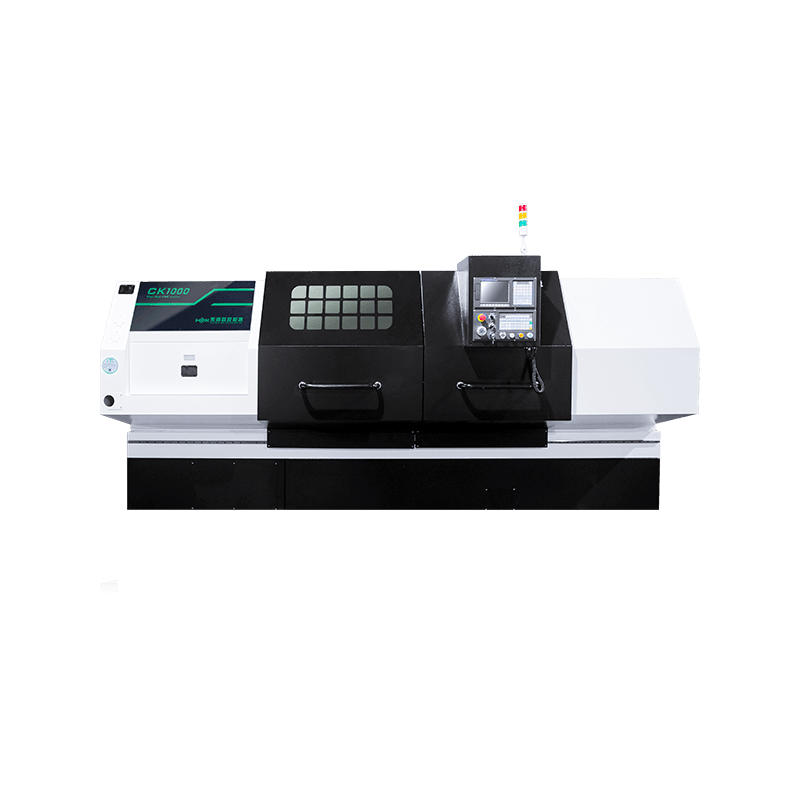
Product Positioning: Large-sized heavy-duty CNC lathe, specifically designed for long shafts and large heavy-duty rotating parts.
Brand/Model: Eastern CNC CK1000 Horizontal CNC Flat Bed Lathe Machine
Main Features and Applicability
Recommended Uses
Comparison Summary: CK800 vs CK1000
| Feature/Model | CK800 | CK1000 |
| Maximum Machining Diameter | φ700 mm | φ850 mm |
| Maximum Machining Length | 1000 mm | 1500 mm |
| Spindle Output Torque | 4100 N·m | 5000 N·m |
| Typical Applications | Medium-sized workpieces, valve bodies | Large parts, long shaft components |
| Suitable Industries | Valve, pipe fittings, flange processing | Energy equipment, construction machinery, marine flanges, etc. |
RECOMMENDED PRODUCTS
All of your quotes will be answered within 2 hours by our professional sales support.
Use reliable parts and components to ensure product quality.
You can expect your order fulfilled within 60 days after placing the order.
All our products come with a one-year warranty.



sales@east-cnc.com

Shangma Industry Area, Shitang Town, Wenling City, Taizhou, Zhejiang, China.

Copyright © Taizhou Eastern CNC Technology Co., Ltd.

Machine Tool Manufacturer Privacy Policy