


 English
 русский
 Español
 عربى
عربى 简体中文
简体中文

Contact Us
All of your quotes will be answered within 2 hours by our professional sales support.
Industry News
 Home / News / Industry News / CNC Lathe Automation Improves Production Efficiency and Flexible Manufacturing
  2026.01.30
 Industry News
Automation Drives Increased Lathe Production Efficiency
Traditional lathe machining often relies on manual operations for clamping, loading and unloading, tool changes, and inspection. While this mode offers some flexibility in small-batch production, it can efficiency fluctuations and inconsistent quality in medium-to-large batch or multi-variety machining scenarios.
Automated lathe systems integrate mechanical structures, control systems, and sensing technology to make the machining process more continuous:
In practical applications, automated lathes are more suitable for machining tasks that require long-term continuous operation and have high delivery time requirements.
The Role of Automatic Tool Changing Technology in Lathe Automation
Automatic tool changing technology is a crucial component of lathe automation, especially in scenarios involving multi-process machining, where its value is particularly evident.
1. Core Advantages of Automatic Tool Changing
Through program control, the lathe can automatically switch tools between different machining processes, allowing a single workpiece to complete multiple processes in one clamping operation. This has a positive impact on improving dimensional consistency and surface quality.
2. Automatic Tool Changing and Process Optimization
In automated lathes, the tool change logic is often deeply integrated with the machining process. Rational tool arrangement and tool change sequence design can further reduce idle time, making equipment operation more efficient.
Main Types of Automated Loading Devices for Lathes
In automated lathe systems, automated loading devices directly affect production efficiency and the range of applicable workpieces. Different loading methods have different focuses in terms of structure, flexibility, and application scenarios.
1. Gantry Robot: A Representative of High Precision and Stability
Gantry robots are usually installed above or in front of the lathe, achieving material handling and loading/unloading through linear motion. Main Features:
Applicable workpiece types:
Gantry robots are more suitable for medium to large-volume production scenarios with stable processes, and can form efficient automated units with automatic fixtures and conveyor lines.
2. Articulated Robotic Arms: Advantages of Flexibility and Adaptability
Articulated robotic arms usually have a multi-degree-of-freedom structure, capable of performing complex movements like a human arm, making them a highly flexible solution in lathe automation.
Main Features:
Applicable workpiece types:
Articulated robotic arms are widely used in flexible manufacturing, especially suitable for processing scenarios that require frequent switching of product models.
Comparison of Different Automated Loading Methods
| Loading Method | Main Focus | Applicable Workpiece Characteristics | Typical Application Scenarios |
| Gantry Robot | High precision, stable rhythm | Regular shape, consistent size | Continuous batch processing |
| Articulated Robotic Arm | Flexibility, multi-station adaptability | Multiple shapes, multiple specifications | Flexible production line |
By rationally selecting the loading method, companies can achieve a balance between production efficiency and flexibility.
Lathe Automation and Flexible Manufacturing Trends
In recent years, the market environment of the manufacturing industry has changed significantly. Customer demands are more diverse, product update cycles are constantly shortening, and the large-volume production model of single products is no longer fully adaptable to current processing needs. Against this backdrop, a production model with multiple varieties and small batches coexisting has gradually become the norm, and the concept of flexible manufacturing has been increasingly introduced into the field of lathe machining.
Lathe automation is constantly evolving under this trend, and its core goal is no longer just to increase output, but to achieve a balance between efficiency and adaptability through flexible configuration.
1. Automated systems are more modular and easier to expand
Traditional automated production lines often have a fixed structure, and once product specifications change, the adjustment costs are high. Under the trend of flexible manufacturing, lathe automation systems are developing towards modular design:
This modular structure enables companies to gradually invest in automated equipment based on actual order situations, avoiding the risks associated with large-scale one-time renovations, and also improving the sustainability of the production system.
2. Integration of Loading, Tool Changing, and Inspection Processes
In a flexible manufacturing environment, automation of a single process is no longer sufficient to meet overall efficiency requirements. Currently, lathe automation systems are gradually achieving integrated development across multiple processes:
By integrating loading, tool changing, and inspection processes, the lathe can complete the entire processing flow with minimal human intervention. This integration not only improves overall production efficiency but also helps maintain processing stability during multi-product switching.
3. More Open Control Systems for Easier Process Adjustment
Flexible manufacturing places higher demands on control systems. Compared to traditional closed control methods, modern lathe automation emphasizes openness and adjustability:
The open control system allows the lathe to quickly adapt to production needs through program adjustments when dealing with workpieces of different sizes, materials, or structures, thereby reducing downtime and improving equipment utilization.
This flexible development makes automated lathes suitable not only for large-scale production but also for customized needs, providing manufacturing companies with a more stable and adjustable production method.
Application of Intelligent Technology in Lathe Automation
In the field of lathe automation, intelligent technology is becoming a new focus:
Through data collection and analysis, companies can better understand equipment operating status, providing a basis for process optimization and capacity planning.
The Impact of Lathe Automation on Enterprise Production Management
Introducing lathe automation is not only an upgrade at the equipment level, but also impacts production management models:
CNC lathe automation, through automatic tool changing, automated loading devices, and intelligent control technology, provides modern manufacturing with new production method options. Whether it's gantry robots focusing on high precision and stable cycles, or articulated robotic arms emphasizing flexibility and adaptability, both play important roles in different application scenarios.
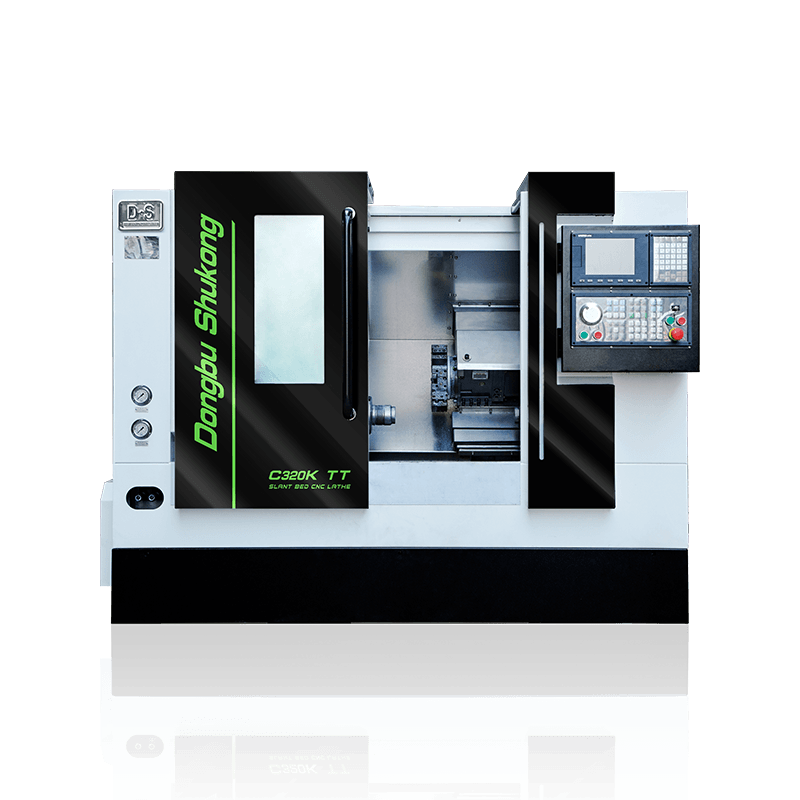
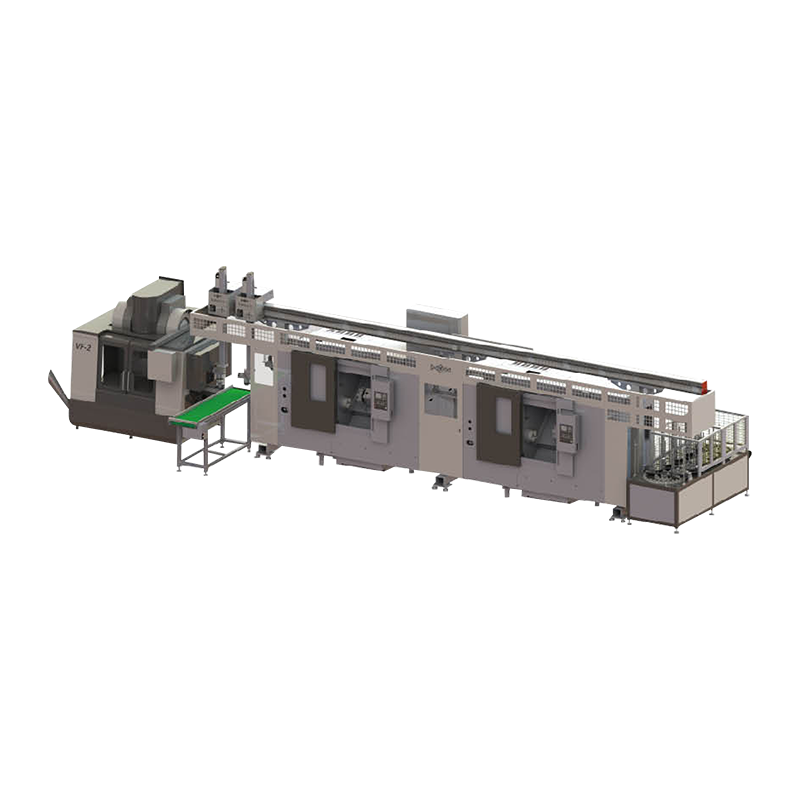
Against the backdrop of modern manufacturing's higher demands for processing efficiency and stability, Eastern CNC's CNC lathes provide manufacturing companies with a production method that combines flexibility and efficiency. This solution seamlessly integrates lathes with automatic loading and unloading systems, achieving continuity and reliability in automated production. Through automation units such as industrial robots and gantry robots, a single operator can control multiple devices simultaneously, significantly improving equipment utilization and output efficiency, effectively reducing manual intervention, while ensuring the consistency and stability of processing quality.
Eastern CNC's automation solution emphasizes program control and system integration capabilities, providing professional automation configurations based on different workpiece design drawings, thus adapting to various production needs. In automated production lines, automated loading, automatic tool changing, and processing are coordinated, making the entire processing process smoother, especially suitable for manufacturing environments where mass production and flexible processing coexist.
Whether it's increasing lathe production cycles or reducing downtime during multi-process machining, Eastern CNC's CNC lathe automation brings significant production benefits to customers and is an important support for modern manufacturing enterprises moving towards intelligent manufacturing.
RECOMMENDED PRODUCTS
All of your quotes will be answered within 2 hours by our professional sales support.
Use reliable parts and components to ensure product quality.
You can expect your order fulfilled within 60 days after placing the order.
All our products come with a one-year warranty.



sales@east-cnc.com

Shangma Industry Area, Shitang Town, Wenling City, Taizhou, Zhejiang, China.

Copyright © Taizhou Eastern CNC Technology Co., Ltd.

Machine Tool Manufacturer Privacy Policy