


 English
 русский
 Español
 عربى
عربى 简体中文
简体中文
Contact Us
All of your quotes will be answered within 2 hours by our professional sales support.
Industry News
 2025.12.26
 Industry News
Contents
The lathe machine, as one of the more fundamental and critical metal cutting equipment, is exhibiting new technological vitality. From traditional manual lathes to highly automated CNC lathes, and then to multi-functional machining centers integrating turning, milling, drilling, and other processes, the development of lathes has not only promoted the improvement of machining efficiency but also profoundly influenced the production model of modern industry.
A lathe is a machine tool that rotates a workpiece around its axis and processes it using cutting tools. During the machining process, the workpiece rotates to create the main motion, while the cutting tool performs the feed motion, thus achieving material removal. Because of this machining method, lathes are particularly suitable for processing rotating parts such as shafts, discs, and sleeves.
Lathes can perform a wide range of machining operations, including external turning, internal hole machining, end face machining, taper machining, grooving, cutting off, and thread machining. With the support of modern CNC technology, the machining accuracy, repeatability, and automation level of lathes have been significantly improved, making them an indispensable core equipment in the modern manufacturing system.
A standard lathe consists of several key systems, with each component working together to ensure machining accuracy and stability.
Feed system and control system: In CNC lathes, servo motors and CNC systems precisely control the tool movement to achieve complex machining paths.
With the continuous refinement of industrial demands, the types of lathes have become increasingly diverse, and different lathe structures are suitable for different production scenarios.
| Lathe Type | Technical Characteristics | Typical Application Areas |
| Conventional Lathe | Manual operation, high flexibility | Teaching and training, repair and processing |
| CNC Lathe | High precision, automated processing | Automotive parts, general machinery |
| Swiss-type CNC Lathe | Sliding headstock machining, suitable for long and slender parts | Medical devices, precision electronics |
| Lathe with Powered Tools | Turning and milling combined, single clamping | Complex structural parts |
| Multi-axis Multi-tool Lathe | High-efficiency mass production | Large-scale industrial manufacturing |
Although CNC technology has greatly reduced the difficulty of operation, experienced lathe operators are still an important guarantee for high-quality production. Excellent operators can not only skillfully write and optimize machining programs, but also reasonably adjust cutting parameters based on material characteristics, tool condition, and machine performance.
In actual production, experienced operators can often predict tool wear trends in advance, avoiding machining errors caused by vibration or thermal deformation. At the same time, they are also skilled at shortening processing cycles through process optimization, reducing production costs and improving overall efficiency for enterprises.
In the field of precision manufacturing, CNC Swiss-type lathes and CNC lathes with powered tools each occupy an important position.
Swiss-type CNC lathes use a "sliding headstock" machining method, where the workpiece moves with the spindle in a guide bushing while the tool remains fixed. This structure greatly improves the machining stability and dimensional consistency of long and slender parts, and is especially suitable for high-precision, small-diameter parts in mass production.
In contrast, lathes with powered tools integrate a power system on the tool turret, giving the tool rotational capability, thus enabling combined turning and milling. These devices have significant advantages in machining complex structural parts, reducing the number of clamping operations and improving overall machining efficiency.
Thread machining is one of the more typical and important applications of lathes. Thread machining on a CNC lathe is usually accomplished using dedicated thread cycle commands. Operators need to accurately set the pitch, depth of cut, number of cuts, and retraction method, and select a tool that matches the thread specifications.
Compared to traditional manual thread turning, CNC thread machining offers significant advantages in terms of accuracy, consistency, and efficiency, especially for standardized parts and mass production. Furthermore, with proper programming, it can achieve high-quality machining of complex structures such as multi-start threads and tapered threads.
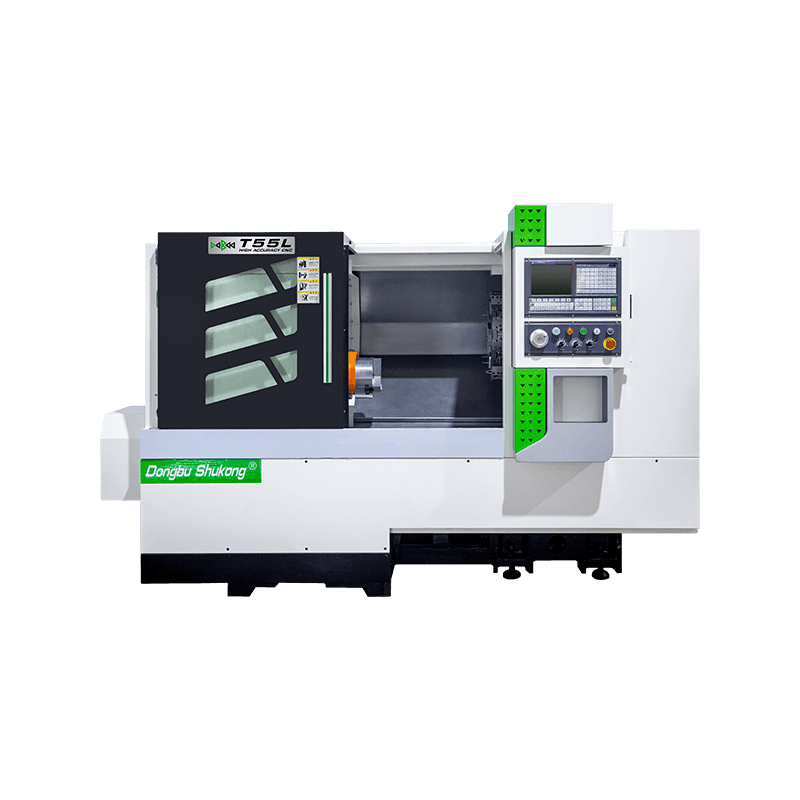
As a rapidly growing domestic CNC machine tool manufacturer, EASTERN CNC focuses on the research and manufacturing of precision lathes, CNC turning and milling composite machine tools, and other products. Brand advantages include:
Reasons for recommendation: Suitable for users seeking cost-effectiveness and comprehensive configurations; strong competitiveness in the domestic market, especially with a good market reputation in the small and medium-batch manufacturing industry.
Q1: What types of parts can a lathe machine process?
Lathes are suitable for processing the following types of parts:
On CNC lathes and turning and milling composite machines, complex surfaces and multi-process machining can also be completed.
Q2: What is a CNC Swiss-type lathe?
A CNC Swiss-type lathe, also known as a sliding headstock lathe, is characterized by the workpiece moving in a guide bushing while the tool remains relatively fixed. This structure effectively supports slender workpieces, significantly reducing vibration, and is particularly suitable for processing small-diameter, high-precision parts with a large length-to-diameter ratio. It is widely used in the medical, electronics, and watchmaking industries.
Q3: What are the advantages of a lathe with powered tools?
A lathe with powered tools can achieve tool rotation on the tool turret, thus completing milling, drilling, tapping, and other processes. Its biggest advantage is its turning and milling composite machining capabilities, which reduce the number of clamping operations, improve machining accuracy and production efficiency, and are especially suitable for parts with complex structures.
Q4: What parameters should be focused on when choosing a lathe?
When choosing a lathe, the following indicators should be given priority:
Q5: What are the future development trends of lathes?
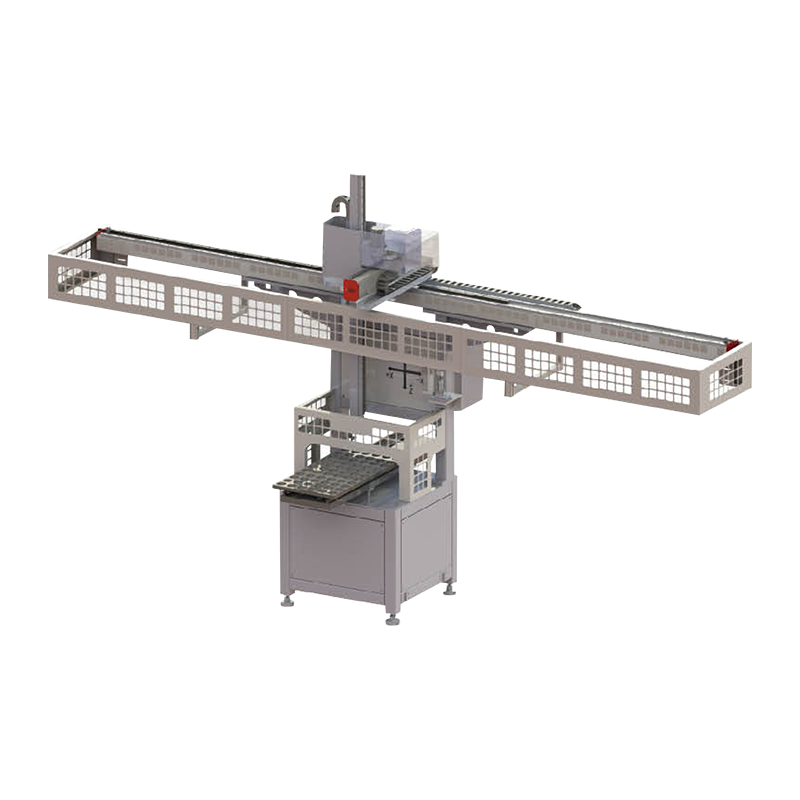
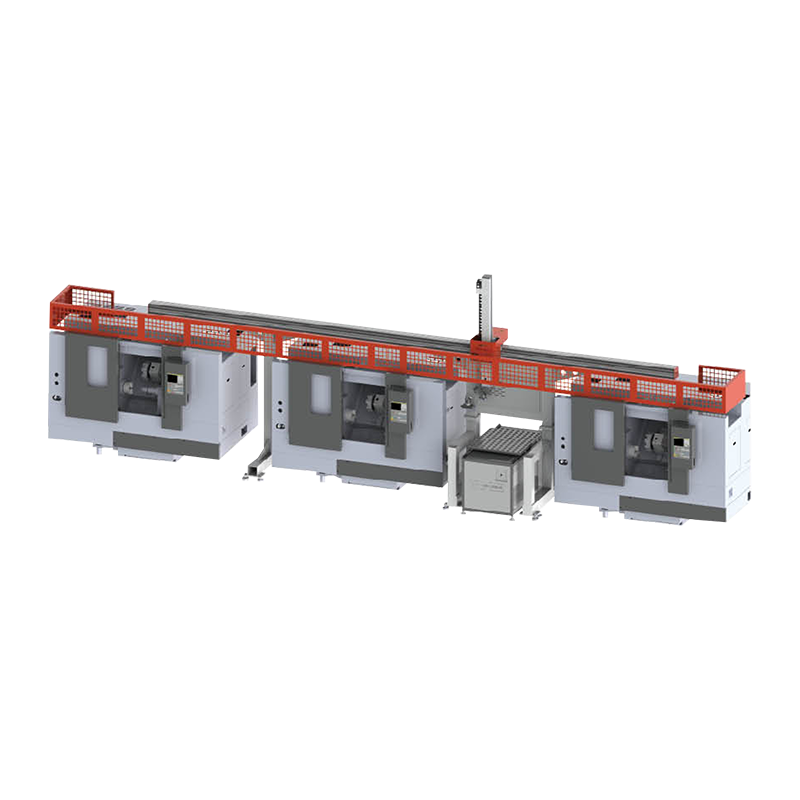
In the future, lathes will develop towards intelligence, integration, and automation. Through integration with robots, automatic loading and unloading systems, and digital management systems, lathes will become key nodes in intelligent production lines, further improving manufacturing efficiency and processing quality.
RECOMMENDED PRODUCTS
All of your quotes will be answered within 2 hours by our professional sales support.
Use reliable parts and components to ensure product quality.
You can expect your order fulfilled within 60 days after placing the order.
All our products come with a one-year warranty.



sales@east-cnc.com

Shangma Industry Area, Shitang Town, Wenling City, Taizhou, Zhejiang, China.

Copyright © Taizhou Eastern CNC Technology Co., Ltd.

Machine Tool Manufacturer Privacy Policy