


 English
 русский
 Español
 عربى
عربى 简体中文
简体中文
Contact Us
All of your quotes will be answered within 2 hours by our professional sales support.
Industry News
 2026.01.02
 Industry News
With the increasing demands for precision, reliability, and batch consistency of valve products in the oil and gas, chemical, power, and water treatment industries, the global valve manufacturing industry places extremely high demands on dimensional accuracy, surface quality, and batch consistency of key components such as valve bodies, bonnets, stems, and seats. Traditional horizontal lathes can no longer meet the high-efficiency machining needs of modern valve manufacturing. East CNC slant bed lathes, due to their high-rigidity structure, high-efficiency chip removal capabilities, and good automation expandability, have become the mainstream CNC equipment in the valve machining field.
Valve Machining Requirements
Valves are core components in industrial control systems and are widely used in various fields such as oil, natural gas, power, and chemical industries. With the rapid development of industrialization, the demand for valves in complex working environments is gradually increasing, and the requirements for their performance and machining accuracy are also increasing. Modern valve manufacturing demands higher precision, production efficiency, and quality consistency. Therefore, using high-performance CNC equipment for valve machining is particularly important, and CNC lathes play a crucial role in this process. In particular, CNC slant bed lathes, due to their unique design and good performance, have gradually become one of the important pieces of equipment in valve machining.
Valve products typically have the following machining characteristics, which place high demands on machining equipment:
The machining requirements of valves involve challenges in high precision, large size, and complex shapes. As a high-rigidity, high-precision CNC lathe, its unique design makes it particularly suitable for the machining of valve components.
Why is a slant-bed lathe suitable for valve machining?
The design characteristics of CNC slant-bed lathes give them unique advantages in valve machining, especially when dealing with large sizes, complex structures, and high-hardness materials. Below, we will detail how CNC slant-bed lathes are suitable for valve machining from several aspects.
1. High-rigidity slant-bed design
CNC slant-bed lathes adopt a slant-bed structure. Compared with traditional horizontal-bed lathes, the slant-bed design provides higher rigidity. Its structure allows the cutting force of the tool to be transmitted more directly to the bed, reducing vibration and errors during the machining process. This rigidity is especially important when machining hard materials or large valve components.
Valve machining often requires cutting thicker or harder materials. The high rigidity of the slant-bed lathe effectively improves cutting stability and ensures high precision during the machining process. This is crucial for the precision machining of large valve components such as valve bodies and valve covers.
2. Smooth chip removal, suitable for casting machining
Most valve manufacturing materials are cast iron or alloy steel, which produce a large amount of chips during machining. If the chip removal system is not smooth, chips can easily accumulate on the workpiece surface or in the machining area, affecting machining quality and efficiency.
The slant-bed design of the CNC slant-bed lathe not only helps to improve rigidity but also optimizes the structure of the chip removal system, allowing chips to be discharged smoothly. Especially for brittle materials such as castings, a smooth chip removal system reduces interference caused by chip accumulation, reduces tool wear, and effectively improves machining efficiency and surface quality. 3. Higher Machining Accuracy and Consistency
The slanted bed design allows CNC slant bed lathes to provide a more stable cutting environment for high-precision machining. The precise digital control system accurately controls the tool's movement trajectory and cutting parameters, ensuring the machining accuracy of each component. For the machining of valve components, such as valve seats, valve cores, and valve stems, the slant bed lathe maintains a high degree of consistency, ensuring that each valve component's dimensions match and meet quality standards.
Furthermore, the high rigidity and stability of the slant bed lathe allow for smaller dimensional deviations during complex machining, ensuring the sealing performance and mechanical strength of the valves.
Integration of CNC Slant Bed Lathes with Automated Production Lines in Valve Manufacturing
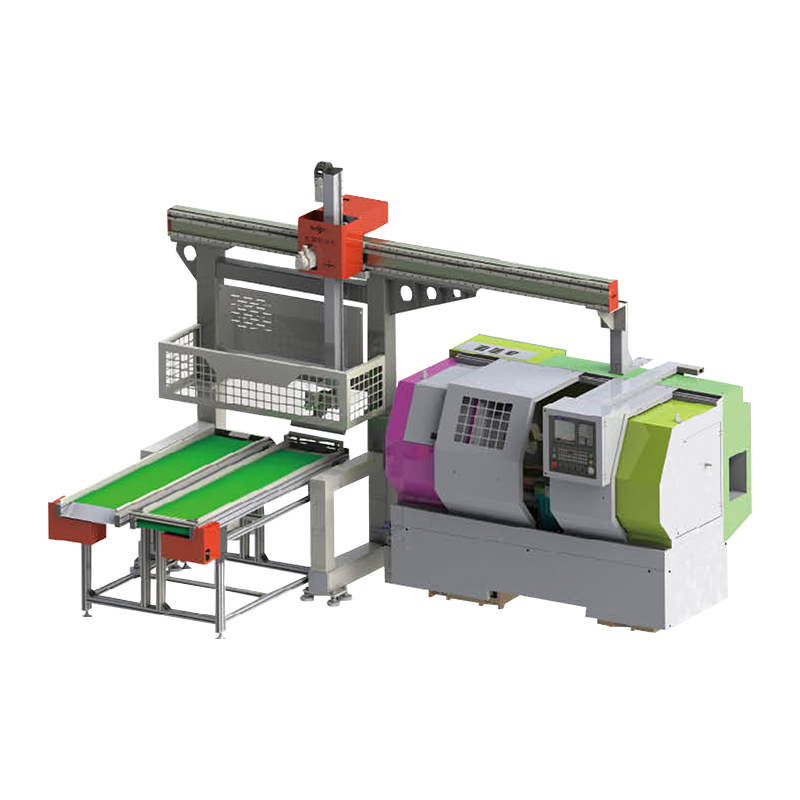
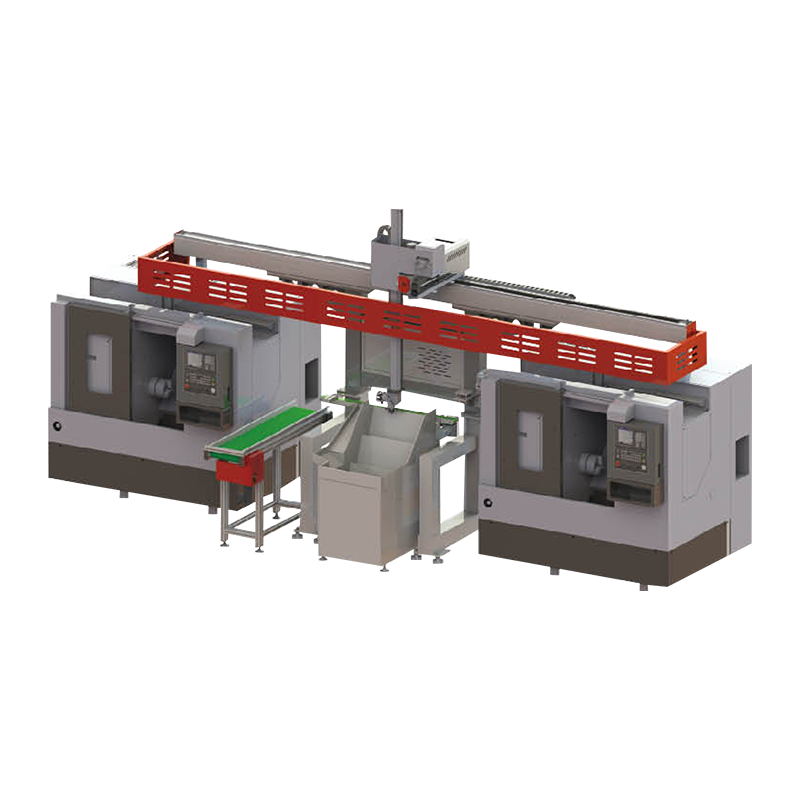
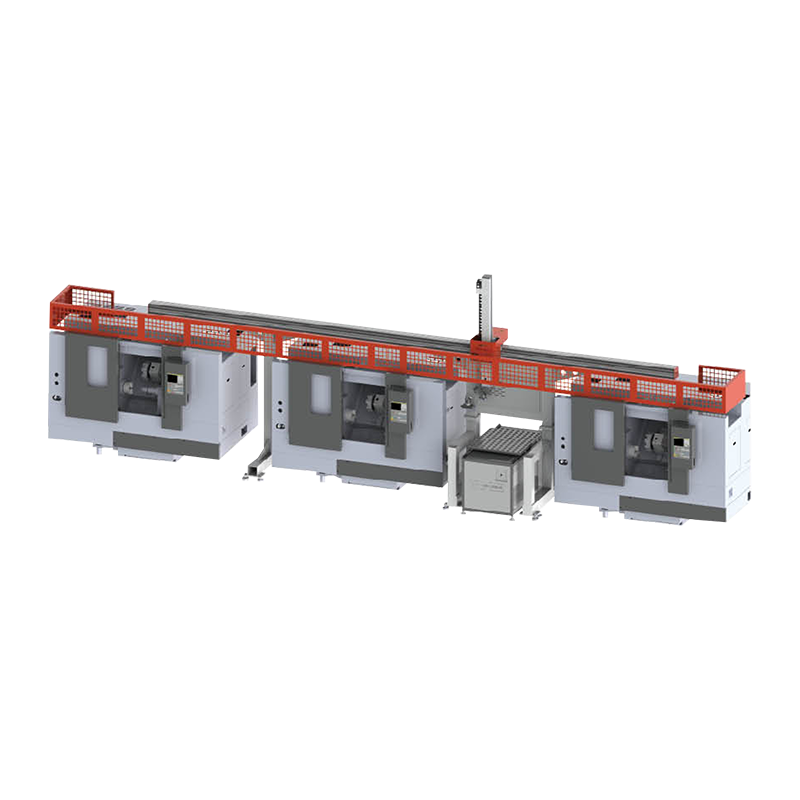
As the valve industry demands higher production efficiency and automation, the integration of CNC slant bed lathes with automated production lines has become a trend. With its good machining performance and automation interfaces, the slant bed lathe can easily integrate with automated devices and robotic systems to form a complete valve production line.
The benefits of this integration include:
For example, through automated feeding and workpiece changing systems, the CNC slant bed lathe can automatically switch between different machining stages without manual intervention, thereby improving overall production efficiency. In addition, combined with automated quality inspection systems, the machining process of valve components can be monitored in real time, ensuring that the dimensions and surface quality of each component meet the requirements.
Typical Machining Objects of Slant Bed Lathes in the Valve Industry
Slant bed lathes are widely used in the valve industry, especially in machining complex-shaped valve bodies, valve seats, and other components, where they can fully utilize their advantages. Common typical machining objects include:
| Machining Object | Machining Content | Main Requirements |
| Valve Body | Inner and outer holes, stepped holes, thread machining | High precision, high surface finish |
| Valve Seat | Inner hole machining, bevel machining | High precision, wear resistance |
| Valve Cover | Tapered machining, end face machining | High precision, high surface finish |
| Valve Stem | Circular machining, end face machining | High surface finish, dimensional stability |
Core Advantages of Slant Bed Lathes in Valve Manufacturing
1. Improved Valve Sealing Performance
High-precision machining ensures long-term stable sealing of valves, reducing the risk of leakage.
2. Shortened Production Cycle
Multi-station tool turret + high-speed tool change, suitable for mass production of valves.
3. Reduced Manual Intervention
Smooth chip removal and high degree of automation reduce downtime for cleaning.
4. Suitable for Multi-variety Valve Production
Quick changeover, suitable for the "small batch, multi-specification" characteristics of the valve industry.
5. Easy to Integrate into Automated Production Lines
Configurable with:
Common Slant Bed Lathe Configuration Schemes for Valve Machining
According to different types of valves and machining requirements, slant bed lathes can be configured with different tools and functional modules to meet efficient and precise machining requirements. Common configuration schemes include:
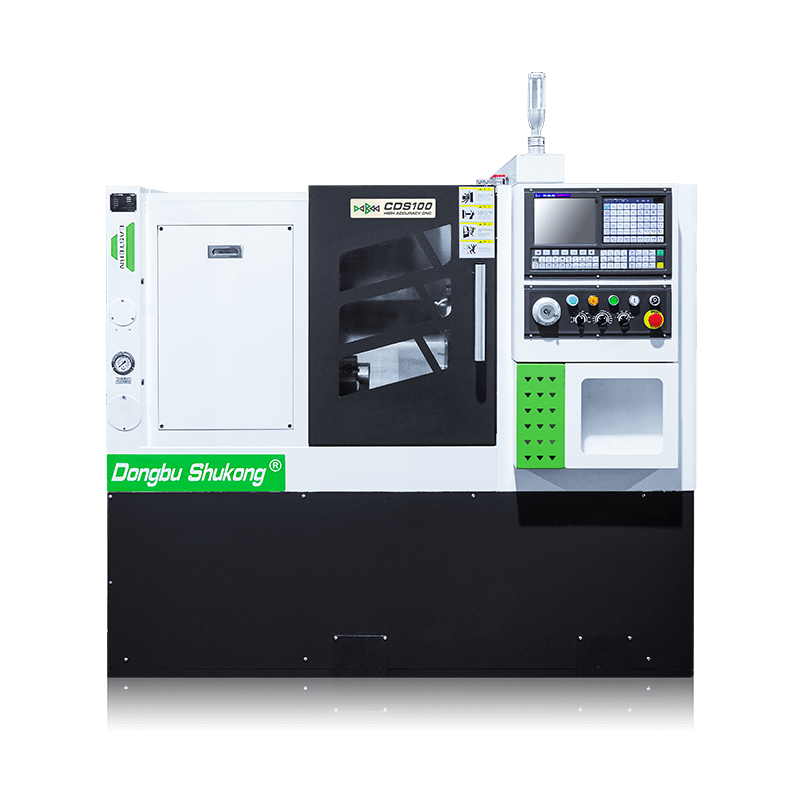
1. Standard Slant Bed CNC Lathe
2. Y-axis Slant Bed Lathe
3. Dual Spindle Slant Bed Lathe
Frequently Asked Questions
1. What are the applications of CNC lathes in valve manufacturing?
CNC lathes are mainly used in valve manufacturing for the precise machining of valve bodies, valve covers, valve seats, and other components. Their applications include turning, milling, drilling, tapping, etc., effectively improving the machining accuracy and production efficiency of parts.
2. What are the advantages of using CNC lathes for valve machining?
The advantages of using CNC lathes for valve machining include:
3. What types of valves are suitable for CNC lathe machining?
CNC lathes are suitable for machining various types of valves, including but not limited to:
The components of these valves, such as valve bodies, valve stems, and valve seats, can all be precisely machined using CNC lathes.
4. How do CNC lathes improve valve machining accuracy?
Through digital control, CNC lathes can precisely adjust the tool position and cutting path according to the program, thus achieving high-precision machining. Their accuracy typically reaches the micron level, ensuring that the dimensions and tolerances of valve components meet standard requirements. This accuracy is crucial, especially for valves used in high-pressure and high-temperature environments.
5. What issues need attention when machining valves with CNC lathes?
When using CNC lathes to machine valves, the following points should be noted:
6. How do CNC lathes handle the machining of complex valve shapes?
Through their multi-axis control function, CNC lathes can achieve complex shapes and multi-angle machining. For example, complex components such as the inner bore of the valve and the cutting of the valve seat can be completed in one go through multi-axis linkage machining, reducing the need for multiple tool changes and tedious processes, greatly improving production efficiency and machining accuracy.
RECOMMENDED PRODUCTS
All of your quotes will be answered within 2 hours by our professional sales support.
Use reliable parts and components to ensure product quality.
You can expect your order fulfilled within 60 days after placing the order.
All our products come with a one-year warranty.



sales@east-cnc.com

Shangma Industry Area, Shitang Town, Wenling City, Taizhou, Zhejiang, China.

Copyright © Taizhou Eastern CNC Technology Co., Ltd.

Machine Tool Manufacturer Privacy Policy