


 English
 русский
 Español
 عربى
عربى 简体中文
简体中文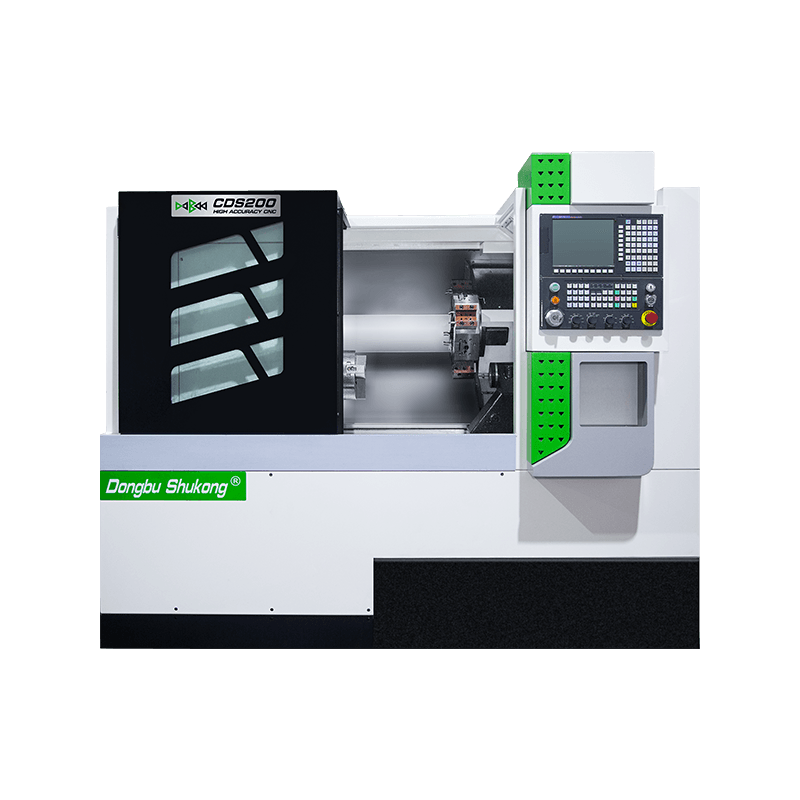
Contact Us
All of your quotes will be answered within 2 hours by our professional sales support.
Industry News
 Home / News / Industry News / Understanding the Types of Lathe Bed — A Practical Guide for Selecting the Right Machine
  2025.11.07
 Industry News
Contents
When it comes to choosing a CNC lathe, one of the more important structural elements to understand is the bed — the foundation of the machine tool that supports the headstock, carriage, and tailstock (or equivalent tool‑holding and motion systems). The bed’s design affects rigidity, accuracy, chip disposal, and the kinds of workpieces the machine can handle.
 |
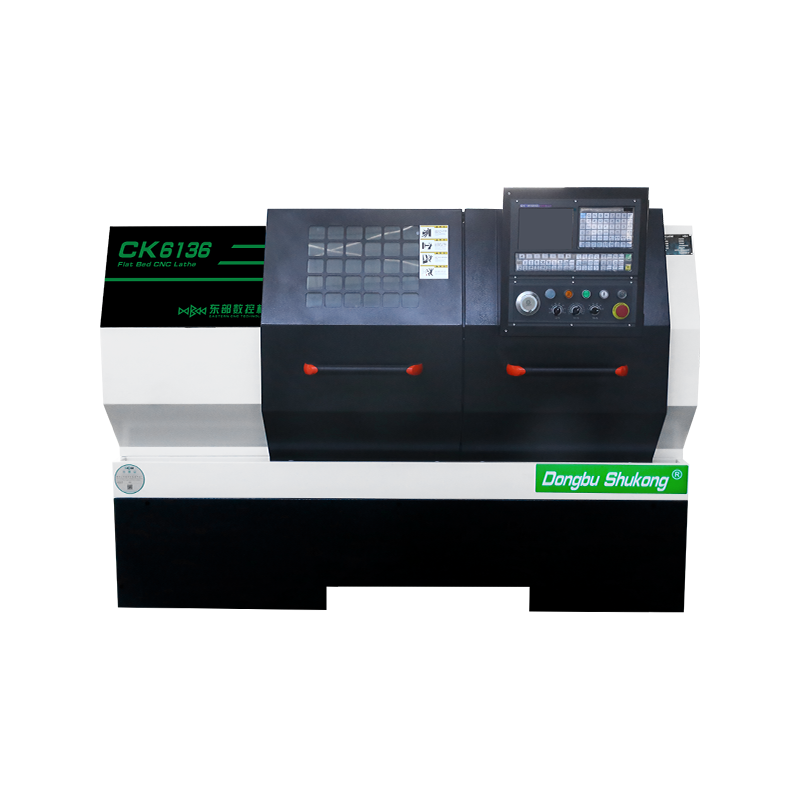 |
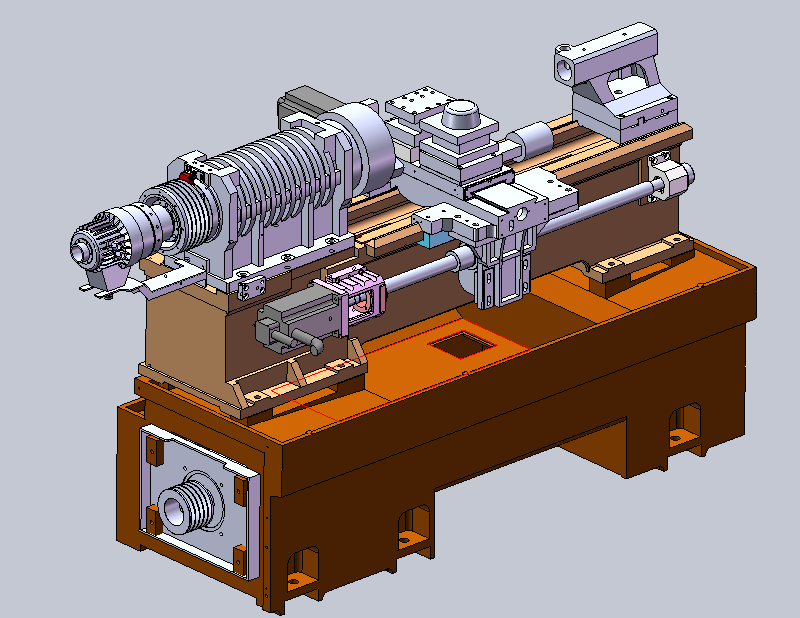
A flat bed lathe, sometimes referred to as a horizontal flat bed lathe, has its bed rails (guideways) running horizontally, parallel to the floor. According to East CNC, their CNC Flat Bed Lathe machines “feature a horizontal bed where the workpiece is securely mounted and rotated while cutting tools move along multiple axes”.
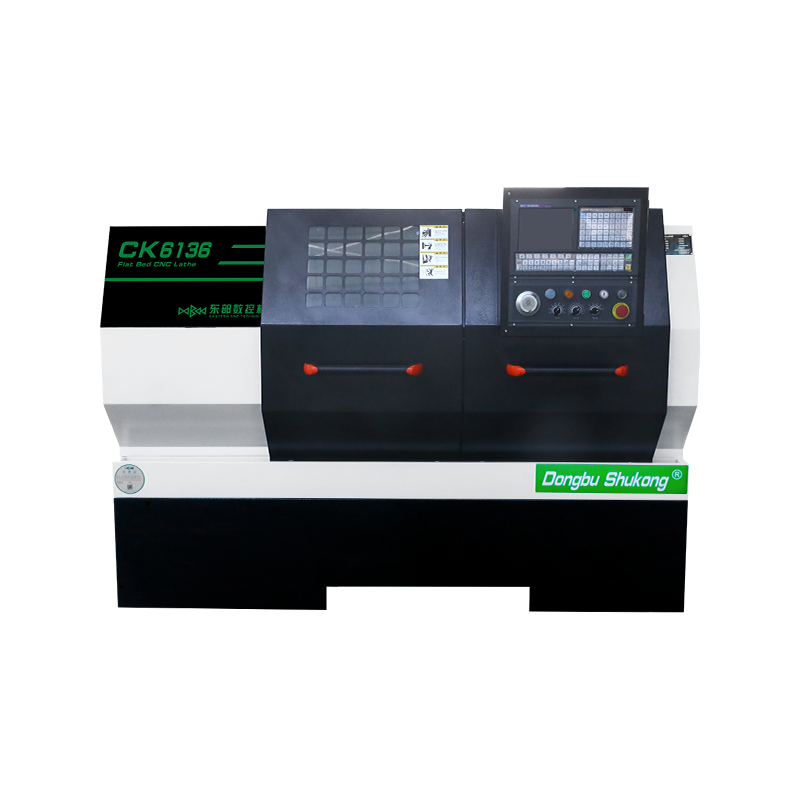
The flat, horizontal bed gives stable support for long or heavy workpieces, which reduces deflection and vibration. For example, the CK6136 Horizontal CNC Flat Bed Lathe claims high rigidity and long‑term cutting accuracy.
Good for heavy turning of shafts, long bars, rollers, and other cylindrical parts. As East CNC notes: “suitable for turning large and heavier workpieces… The flat bed design allows for easy handling of large workpieces”.
Simpler in terms of loading/unloading than some inclined or vertical configurations.
Chip removal and coolant drainage may not be as efficient as some slanted or vertical designs, since gravity doesn’t aid chip flow as much.
The footprint can be larger for a given rigidity; some slant designs achieve similar rigidity in a more compact space.
The machining envelope may be limited by the horizontal bed length and carriage travel.
See the CJK6130L Horizontal CNC Flat Bed Lathe on the East CNC site: “Horizontal CNC Flat Bed Lathe, designed for precision turning operations in small manufacturing environments.”
Long shafts and bar work
General horizontal turning
Workshops where ease of access and classic configuration are preferred
 |
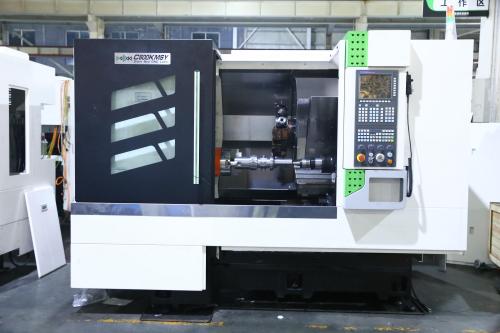 |
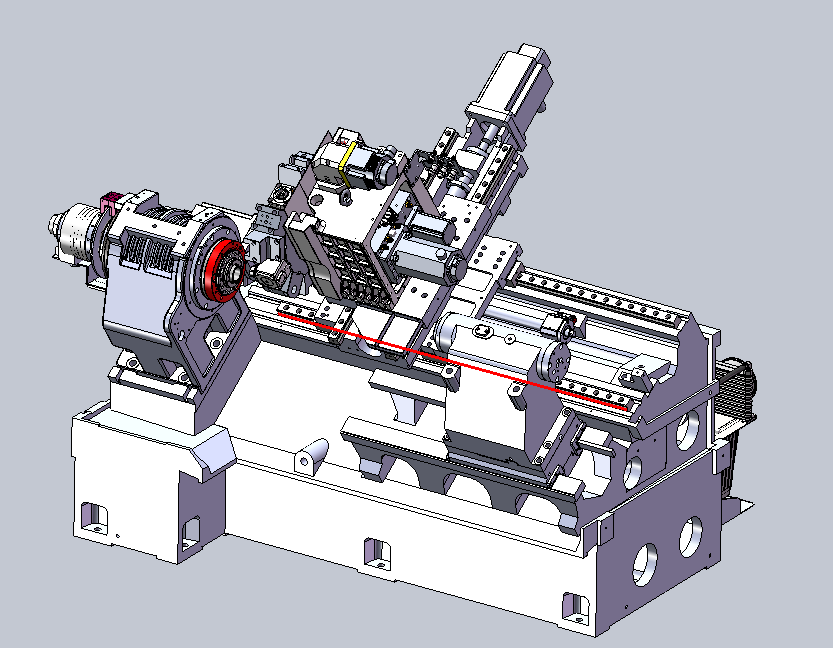
A slant (or inclined) bed lathe is built such that the bed and rails are inclined at an angle — commonly between 30° and 60° — relative to horizontal. This design is introduced by Eastern CNC in their Slant Bed Lathe product line: “Slant bed lathe is a type of CNC lathe designed with an angled bed.”
The slanted bed aids chip removal: chips fall away from the cutting zone by gravity, improving tool life and finish. Industry sources describe that the slanted configuration improves chip flow and vibration dampening.
Greater rigidity for a given footprint: The inclined geometry often gives a larger cross‑section for the bed, which helps resist bending and torsion under load. For example: “the cross‑sectional area of the inclined bed CNC lathe is larger… the ability to resist bending and torsion is stronger.”
Better accessibility: The operator and tooling often have easier reach to the workpiece, and the structure often allows for more compact layout.
Loading/unloading may require more thought if the bed is steep.
The machine may look more complex and sometimes more expensive due to casting and structural detail.
Some setups may require adjustment of coolant and chip handling systems to suit the incline.
One of the slant bed models from East CNC: C500K MSY/C500K/C500K with Sub‑Spindle Heavy Cutting Slant Bed CNC Lathe. The site describes: “Adopts an integrated 45° inclined bed and circular cavity cast iron structure to ensure heavy cutting capabilities.”
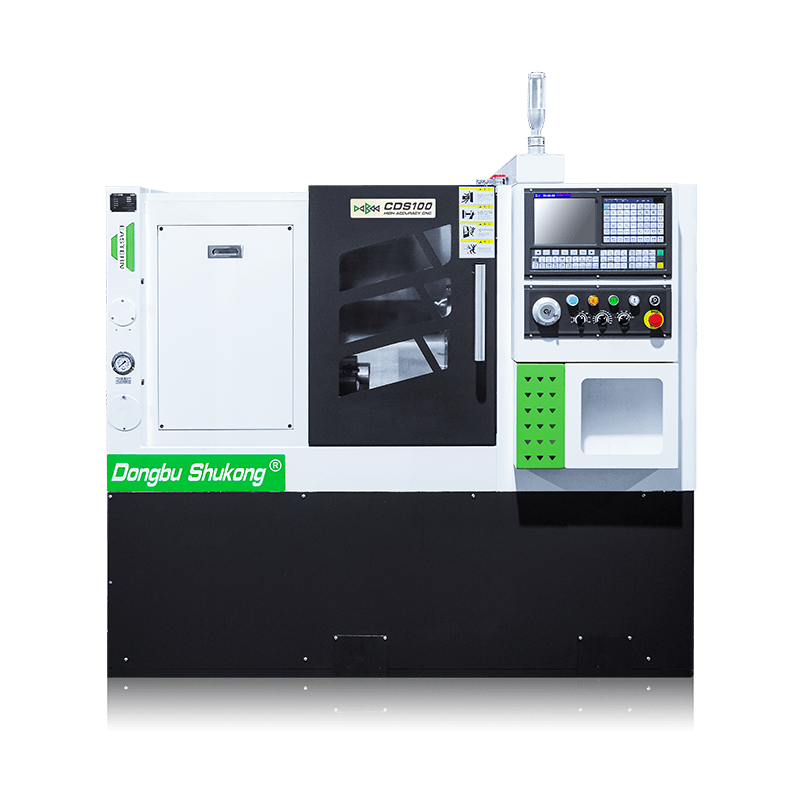
Also, the CDS100/CDS100M/CDS100P series: “tilting bed design improves chip evacuation and provides easier access to the workpiece”
Medium‑to‑high precision turning tasks requiring improved chip control
Automated production lines where chip flow and accessibility matter
Workshops that need a more compact footprint but high rigidity
 |
 |
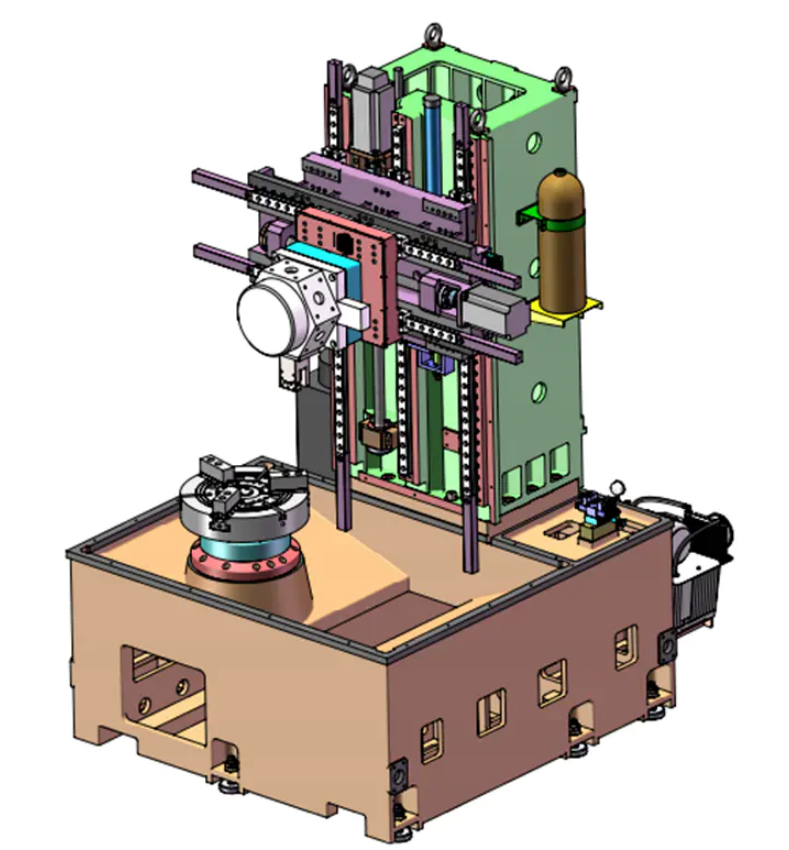
A vertical bed lathe (often called a vertical turning lathe or VTL) features a spindle oriented vertically while the bed is horizontal (usually a rotating table). In terms of bed structure, however, the support base and column design elevate the bed and spindle arrangement so the workpiece lies horizontally on a table, and the tool moves vertically or horizontally. East CNC’s vertical product line emphasises that “Vertical Turning Lathe machines have… a spindle that is oriented vertically… designed to handle large and heavy workpieces with high precision.”
Excellent for large diameter parts: The vertical orientation allows the workpiece to sit on a horizontal table, often easier to load and support, especially heavy or large components. Example: VTC100 Vertical Lathe, “Maximum Machining Diameter: 1000mm… used for large and heavy workpieces.”
Gravity‑assisted part support: The vertical orientation helps keep the workpiece firmly seated and can reduce spindle deflection under load. In addition, chips fall away from the work area naturally.
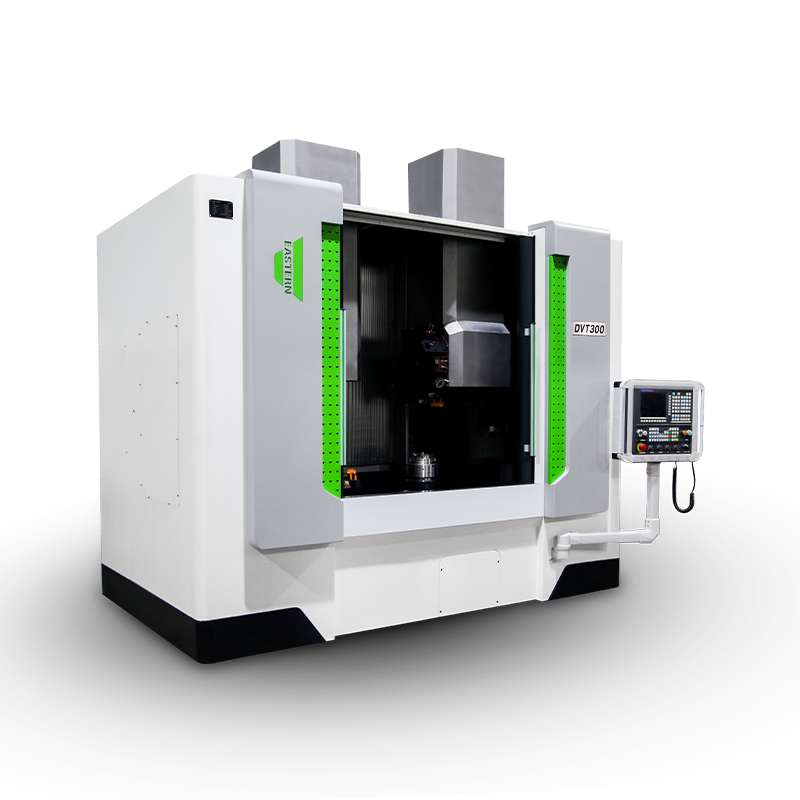
Versatility: Many vertical lathes also incorporate milling, drilling, or live tooling functionality. For example, the DVT300 Double Spindle/Double Turret Vertical Lathe is designed for complex parts.
Floor space and height may need to be considered, as the structure can be tall.
Loading/unloading may need an overhead crane or lifting equipment for heavy workpieces.
Not always good for long, slender shafts; horizontal or slanted beds may be better suited for such work.
On the East CNC website under Vertical Turning Lathe: “Vertical Turning Lathe Machine is a versatile machine tool … mainly used for various mechanical processing fields.”
Also product VTC65: “The bed features good shock absorption due to its high‑strength inoculated cast iron construction… the machine is mainly used for machining large and heavy workpieces with large radial dimensions, small axial dimensions, and complex shapes.”
Large diameter flanges, discs, bearings, and turbine housings
Heavy industry, aerospace, and energy sectors
Parts where vertical spindle orientation gives advantages in support and machining stability
Selecting the correct lathe bed type depends on your workpiece geometry, production volume, automation needs, and shop layout. Here are some guiding questions:
Workpiece shape & size: Long bars or shafts ⇒ flat bed may be good. Medium parts with chip removal needs ⇒ slant bed. Large diameter discs or heavy components ⇒ vertical.
Chip disposal & automation: If automatic chip removal and high throughput are required, slant or vertical beds may provide better natural chip flow.
Rigidity & footprint: If space is limited but high rigidity is needed, a slant bed might offer the good compromise.
Loading & handling: Consider how the workpiece is loaded/unloaded. Heavy/difficult workpieces may favour vertical table style or integrated loading systems.
Versatility & tooling: If you need multifunction machining (milling, drilling, turning), then vertical or advanced slant models may serve better.
Production volume & accuracy: For high accuracy and automated production lines, the bed design and guideway structure (as described by East CNC’s high/low rail bed design) matter.
The bed is not just a static base — it dramatically affects precision, life cycle, and output quality. For example:
East CNC’s article on “Understanding The High And Low Rail Bed CNC Lathe” explains how the high rail takes vertical loads and the low rail resists torsion, so the bed design directly affects tool‑center accuracy under cutting loads.
According to industry analysis, the slanted bed geometry can improve rigidity by increasing cross‑sectional area and aligning cutting forces with gravity, less vibration and better results.
Thus, selecting an appropriate bed type is essential for achieving consistent, reliable machining outcomes.

Frequently Asked Questions (FAQ)
A1: The flat bed has guide rails parallel to the floor, offering an accessible design for long parts and simpler loading. A slant bed is inclined (often 30°‑60°), improving chip evacuation, rigidity, and accessibility for operators.
A2: Yes, you can, but large diameter parts may require specialized tooling, support, and the flat bed may not offer the same ease of loading or gravity‑assisted chip discharge as a vertical or slant bed. For good efficiency, a vertical turning lathe may be more suitable.
A3: Because the bed is inclined, chips naturally fall downward towards the chip conveyor rather than collecting around the guideways. Gravity assists chip evacuation, reducing heat build‑up and allowing better tool life.
A4: Yes, for many heavy or large‑diameter components, vertical lathes offer advantages: the workpiece sits on a horizontal table, reducing overhang; gravity helps stabilize the part; and the machine can be more space‑efficient for certain workpiece sizes.
A5: Very important. The bed and guideway design influence how well the machine resists deflection, vibrations, and thermal distortion under load. For example, East CNC offers high- and low-rail designs to enhance rigidity and precision in demanding applications.
A6: Yes. Slant and vertical bed designs often facilitate automatic loading/unloading, robotic integration, and better chip removal, making them suitable for automated production lines. Flat beds may require additional systems for automation.
RECOMMENDED PRODUCTS
All of your quotes will be answered within 2 hours by our professional sales support.
Use reliable parts and components to ensure product quality.
You can expect your order fulfilled within 60 days after placing the order.
All our products come with a one-year warranty.



Shangma Industry Area, Shitang Town, Wenling City, Taizhou, Zhejiang, China.

Copyright © Taizhou Eastern CNC Technology Co., Ltd.

Machine Tool Manufacturer Privacy Policy