


 English
 русский
 Español
 عربى
عربى 简体中文
简体中文
Contact Us
All of your quotes will be answered within 2 hours by our professional sales support.
Industry News
 Home / News / Industry News / Intelligent Machining Drives Pump Industry Upgrades – CNC Technology Empowers Precision Manufacturing
  2025.12.12
 Industry News
Contents
As pump equipment continues to evolve towards higher efficiency, longer lifespan, and greater reliability, the machining quality of metal parts has become a critical factor. With the maturity of CNC machining technology, intelligent equipment centered on CNC lathes is gradually becoming an important production force for pump manufacturers. A recent survey in the machining field revealed that several industry experts pointed out that typical components such as pump housings, pump rotors, and pump shafts require higher standards for dimensional consistency and concentricity. CNC turning offers significant advantages in stability, repeatability, and efficiency, and will continue to drive the pump industry's manufacturing processes towards digitalization and automation.
Pump housings, pump rotors, and pump shafts, as core components of the pump system, are mostly made of steel, cast iron, stainless steel, and other metal materials. Their complex overall structure requires strict dimensional control and axial concentricity during machining. Traditional manual turning methods struggle to maintain stable quality in mass production, while CNC lathes, through programmed toolpath control, make machining results predictable and reproducible. In the machining of pump casings, areas such as the internal cavity, flanges, and sealing surfaces often require multiple processes. CNC lathes can complete roughing and finishing on the same machine, reducing the number of setups and mitigating the risk of positional errors. Pump shaft machining requires maintaining high straightness and surface finish. CNC turning, combined with appropriate cooling methods, can achieve better heat dissipation and stable cutting in long shaft machining, further improving dimensional consistency.
Industry engineers stated, "Most pump parts are rotating components, requiring high precision in fitting. The stability and repeatability of CNC lathes make batch machining of these parts more controllable." As the pump industry increasingly focuses on quality traceability and reliable operation, relying on CNC machining to achieve standardized and consistent production will become a common choice for manufacturing companies.
Vertical lathes have significant advantages in pump product machining due to their structural layout, load-bearing capacity, and adaptability to large, irregular workpieces. This will be explained below from three dimensions: application scenarios, typical process schemes, and advantages.
Typical Machining Applications of Vertical Lathes in the Pump Industry
Pump Body Rough and Finish Turning: Suitable for machining end faces, inner holes, and outer diameters of various types of pump bodies, capable of stably completing cutting tasks on large, heavy, or asymmetrical workpieces.
Complete Process Scheme for Pump Body Machining (Example Flow)
The following are common machining steps for pump body workpieces. Process adjustments can be made according to different structures:
Blank Positioning and Clamping
Rough machining of end faces
Rough machining of inner holes and mounting holes
Finish machining of end faces and inner holes
Flange and sealing surface machining
Partial structural machining (depending on equipment function)
Inspection and re-inspection
More suitable for clamping large and heavy workpieces. The workpiece's center of gravity falls above the worktable; its own weight helps stabilize positioning and reduces the risk of instability.
Smooth machining process, easier control of cutting vibration
Space saving
Improved chip removal and cooling
Suitable for multi-process machining (suitable for composite configurations)
Based on the widespread adoption of CNC machining, the industry is further moving towards smart manufacturing. Experts say that CNC is not just mechanical equipment, but a programmable and manageable digital system, and its future development will extend from single-machine automation to factory-level and group-level collaborative optimization.
1. Accelerated Implementation of CNC Programming Automation
Traditional programming relies on operator experience, resulting in limited efficiency. With the development of software technology, new-generation programming tools are beginning to support functions such as automatic path planning, machining parameter recommendation, and simulated machining, making the programming process faster and more standardized. For complex parts like pumps, this technology can significantly improve programming speed and reduce manual intervention.
2. Data-Driven Optimization of Production Processes
The interconnection between CNC equipment and measurement systems, tool management systems, and warehousing systems makes the manufacturing process more transparent. By collecting machining data in real time, companies can monitor equipment operating status, predict tool wear, and optimize production scheduling, thereby improving overall capacity.
3. Moving Towards Smart Manufacturing and Flexible Factories
Future pump manufacturing workshops will be more digitalized and automated. Equipment interconnection can form flexible production lines, enabling multi-variety processing scheduling; automatic loading and unloading and robot collaboration can reduce operational burdens; data platforms can manage the entire production chain, making production more efficient from planning to execution.
Industry experts believe that with the continuous development of industrial automation technology, CNC machining will further integrate with sensing technology, industrial software, and digital twins, providing the pump industry with a more stable and efficient manufacturing system.
In the pump industry, key components such as pump housings, pump shafts, and pump rotors are often disc-shaped or long-shaft-shaped. Machining these components requires balancing dimensional accuracy, concentricity, and surface quality while meeting batch production efficiency requirements. For these typical machining tasks, vertical CNC lathes, with their structural advantages and stability, have become one of the essential pieces of equipment for machining pump parts.
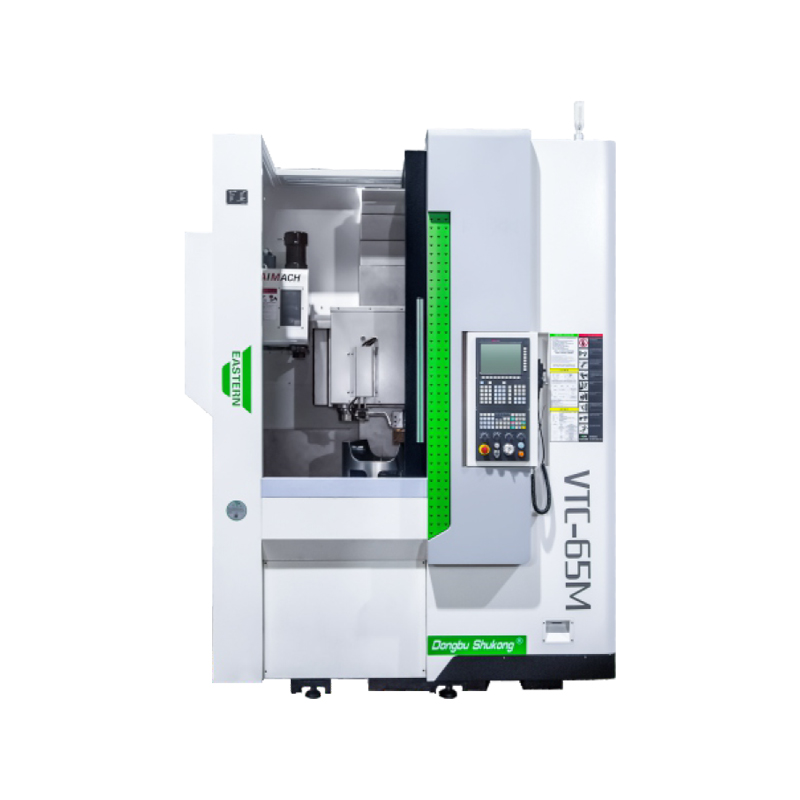
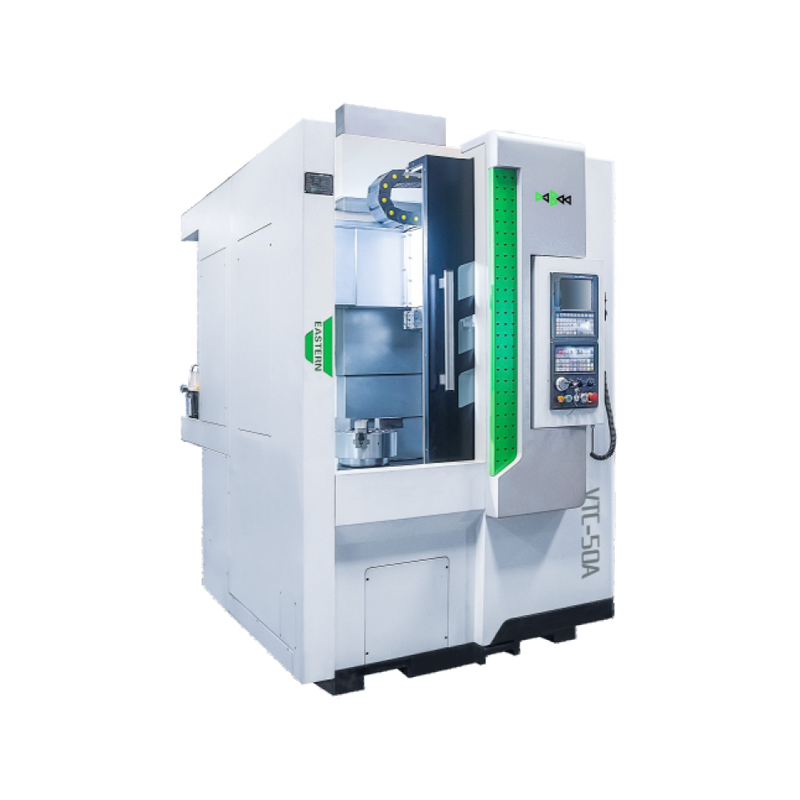
VTC65 Vertical Lathe — A Solution for Machining Medium-Sized Pump Components
The VTC65 is one of the more popular vertical CNC lathe models on this website. It is suitable for machining medium-sized pump components, including CNC turning of disc-shaped and short-shaft complex workpieces such as pump housings, pump rotors, and pump shafts.
This model is suitable for medium-batch, high-precision pump part manufacturing, representing an upgrade from traditional horizontal machining methods.
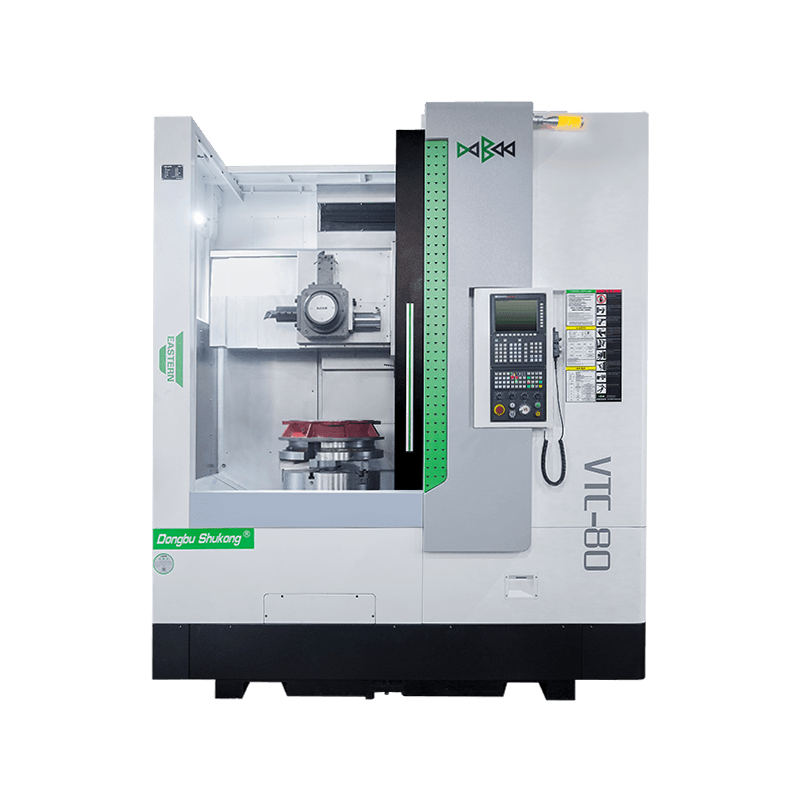
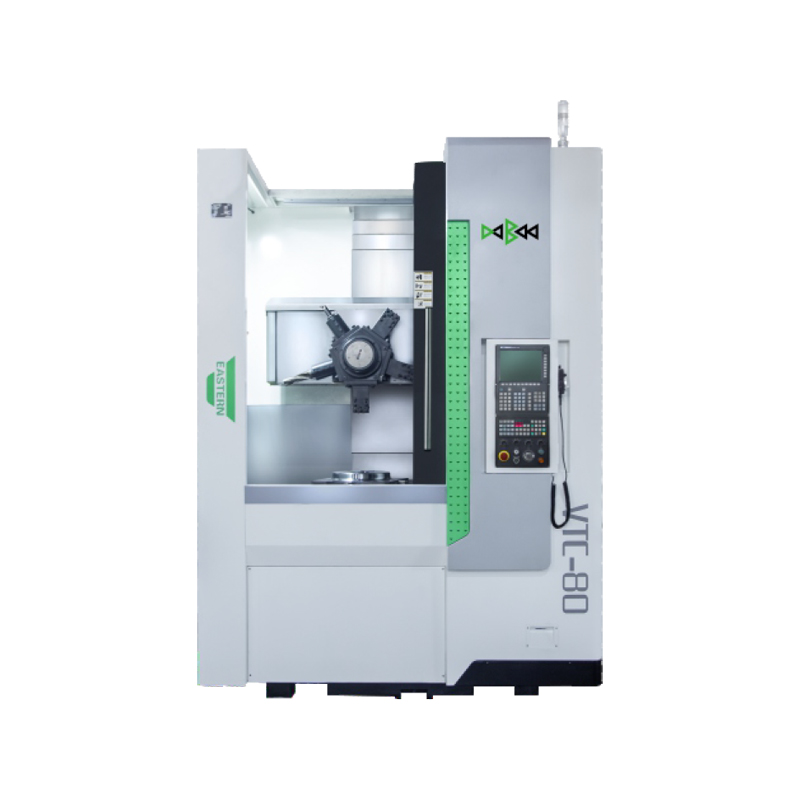
VTC80 Vertical Lathe — Machining Large Pump Parts and Complex Working Conditions
For larger and more complex pump parts, such as large pump housings or multi-process assembly parts, the VTC80 vertical CNC lathe offers greater machining space and stronger power support.
This model is suitable for pump manufacturers facing the production needs of larger batches and more complex structural parts, improving overall capacity and machining consistency.
Advantages of Vertical CNC Lathes in Pump Industry Machining
Combining the pump industry's dual demands for high precision and production efficiency, vertical CNC lathes exhibit significant advantages in the following aspects:
Compared to traditional horizontal lathes and manual machining methods, vertical CNC lathes are better suited to meet the pump industry's comprehensive requirements for high precision, high stability, and batch efficiency.
RECOMMENDED PRODUCTS
All of your quotes will be answered within 2 hours by our professional sales support.
Use reliable parts and components to ensure product quality.
You can expect your order fulfilled within 60 days after placing the order.
All our products come with a one-year warranty.



sales@east-cnc.com

Shangma Industry Area, Shitang Town, Wenling City, Taizhou, Zhejiang, China.

Copyright © Taizhou Eastern CNC Technology Co., Ltd.

Machine Tool Manufacturer Privacy Policy